Brand Positioning
Audience and customer separation
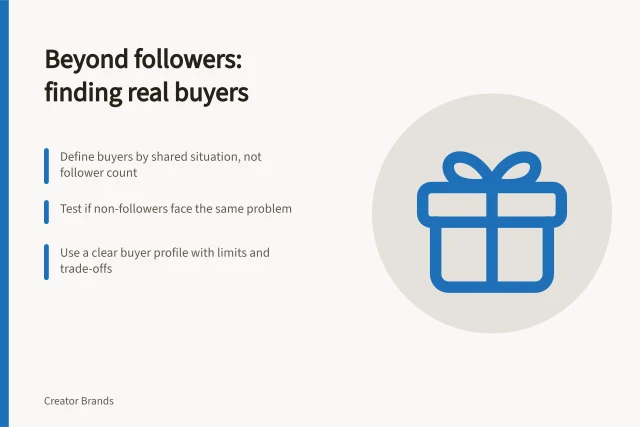
Separate creator engagement, product need and purchases. Research buyers beyond followers and measure their orders without treating traffic source as follower status.

Desk
Covers brand positioning, product development and identity for creator-owned lines.
Brand Positioning
Separate creator engagement, product need and purchases. Research buyers beyond followers and measure their orders without treating traffic source as follower status.
Product Development
Audit early creator product feedback against the exact offer, action, participant context and product version before making the next commitment.
Manufacturing
Compare first-product manufacturers on capability, quality evidence, sample work, timing and clear production terms before placing a run.
Product Development
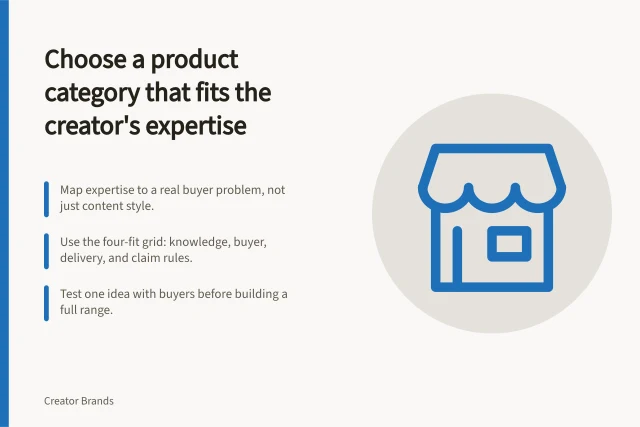
Choose a creator product category by matching genuine expertise with a buyer problem, delivery capability and claims the team can support.
Brand Positioning
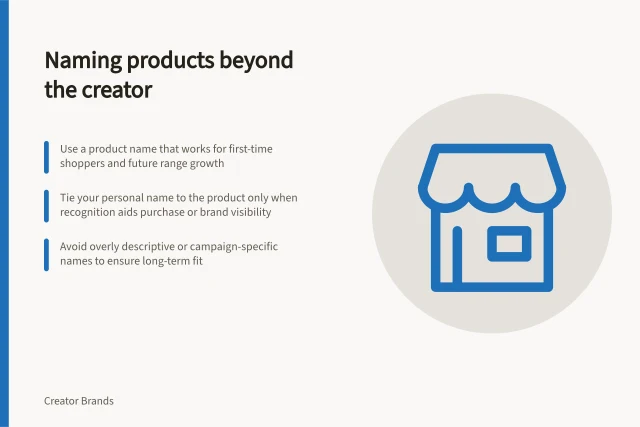
A creator’s audience may recognise a personal name instantly. A first-time shopper may not. A product name should tell both groups what to look for and remain …
Product Development
Use post-purchase reports and buying situations to choose a credible second product without treating suggestions as orders.
Product Development
Recruit relevant people beyond a creator’s following, ask neutral product questions and record the limits of their feedback.
Manufacturing
Route creator brand safety reports to qualified owners, check Australian reporting duties and give affected customers clear, approved recall information.
Brand Positioning
Compare a creator asset licence with shares in a product company, including control, payment, duties and exit terms.
Brand Positioning
A creator can bring the first audience to a product, but the product still needs to explain itself to someone who has never seen a post. Brand identity works when …
Manufacturing
Plan a creator product’s manufacturing handover, from a shared brief and supplier agreement to production checks and accepted units.
Brand Positioning
Define who a creator product serves, what buyers compare it with and the credible promise that connects the product with the creator.
Product Development
A practical development path for creator products, from customer problems and requirements to prototypes, buying signals and launch decisions.
Product Development
Decide whether a creator product range should expand by comparing customer roles, substitution risk, operating capacity and cash across the range.
Brand Positioning
Separate product issues from creator allegations, correct inaccurate claims and protect customer orders during a public dispute.
Brand Positioning
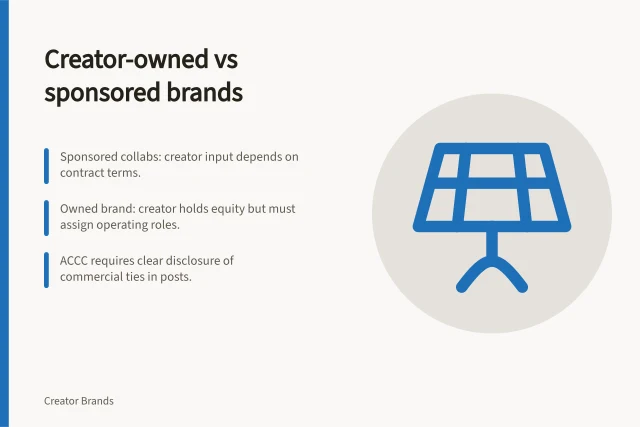
Compare creator ownership and sponsorship by product control, operating work, income, asset rights and the message buyers see.
Brand Positioning
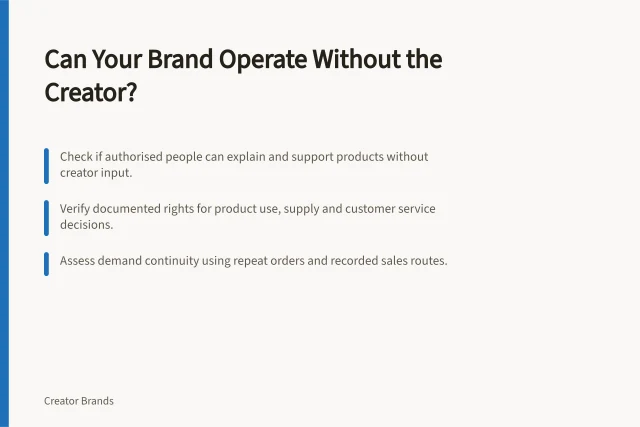
Assess whether a creator product brand has the rights, people, supply, service and demand evidence for a defined low-activity period.
Brand Positioning
Describe prospective buyers by their product need, alternatives and constraints, then refine the profile with appropriately bounded research.
Product Development
Packaging must help a buyer understand the product before the creator’s promotion reaches them. Start with the category, quantity, intended use and any instructions …
Brand Positioning
Read creator comments, product questions and early orders for what they actually show, without turning engagement into a sales forecast.
Product Development
Estimate first-run stock from buying evidence, saleable units, supplier limits and cautious demand scenarios.
Brand Positioning
Make a creator product understandable on a shelf with clear product copy, accurate claims and a useful role for the creator story.
Product Development
Respond to creator brand product complaints by establishing the facts, assessing remedies and giving a clear next step without making the issue personal.
Manufacturing
Keep a clear approved reference, current specification, change record and batch evidence so production can be checked against the agreed item.
Brand Positioning
A familiar face can draw attention to a launch. It should not be the only clue to what is being sold. Test the design with someone who does not follow the creator …
Product Development
Retire a creator brand product in a controlled order: close new sales, reconcile paid orders and maintain support for existing owners.
Manufacturing
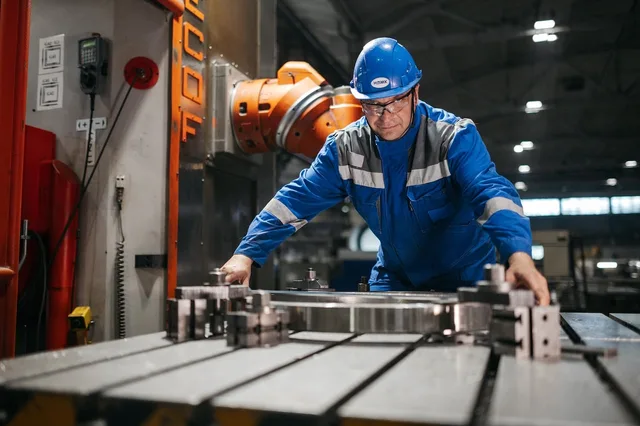
Review production units, test evidence, packaging and product claims before accepting stock to fulfil creator brand orders.
Brand Positioning
Trace who holds and may use a creator brand’s trade marks, artwork, content and product assets as a partnership changes.
Brand Positioning
Preserve the claim, check product and order facts, assess patterns carefully and keep public conclusions within the evidence.
Brand Positioning
Write a product promise a new buyer can assess, then describe the creator’s actual role without overstating benefits or experience.
Brand Positioning
Build a creator launch sequence that explains the product, resolves buying questions and announces sales only when the offer is ready.
Brand Positioning
Decide which creator brand questions can be answered publicly, which need a private case, and how to make the hand-off reliable.
Brand Positioning
Check buyer understanding, brand expectations and delivery requirements before adding a new creator product category.
Product Development
Plan a prototype task, observe intended customers using the sample, record failures and retest revisions without overstating the results.
Product Development
Test a creator product idea with a defined offer, relevant buyers and meaningful actions while keeping feedback separate from actual orders.
Product Development
Turn audience complaints into testable product requirements by checking real behaviour, defining outcomes and recording design trade-offs.
Brand Positioning
Connect the creator’s real contribution to a product decision, and keep the launch story accurate about the item customers can buy.





![Turn complaints into clear product needs: Collect recurring feedback from customers, followers and users.; Use the formula: For [user] in [situation], must [action], checked by [measure].; Verify requirements with observation, not just suggestions or preferences. Turning audience problems into product requirements](/covers/turning-audience-problems-into-product-requirements-640.webp?v=090fb2da)