Brand Positioning
Audience and customer separation
Separate creator engagement, product need and purchases. Research buyers beyond followers and measure their orders without treating traffic source as follower status.

Section
Brand Positioning
Separate creator engagement, product need and purchases. Research buyers beyond followers and measure their orders without treating traffic source as follower status.
Brand Positioning
A creator’s audience may recognise a personal name instantly. A first-time shopper may not. A product name should tell both groups what to look for and remain …
Brand Positioning
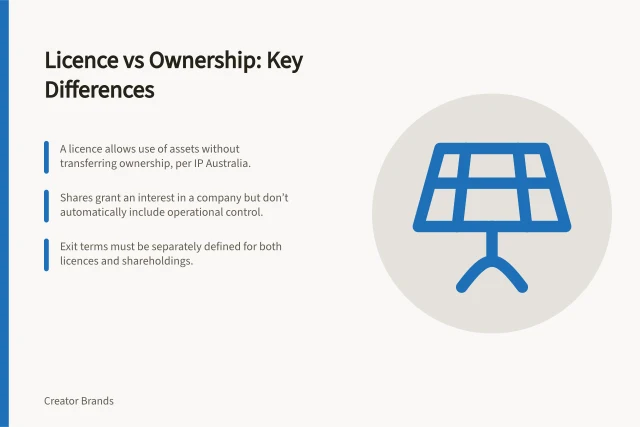
Compare a creator asset licence with shares in a product company, including control, payment, duties and exit terms.
Brand Positioning
A creator can bring the first audience to a product, but the product still needs to explain itself to someone who has never seen a post. Brand identity works when …
Brand Positioning
Define who a creator product serves, what buyers compare it with and the credible promise that connects the product with the creator.
Brand Positioning
Separate product issues from creator allegations, correct inaccurate claims and protect customer orders during a public dispute.
Brand Positioning
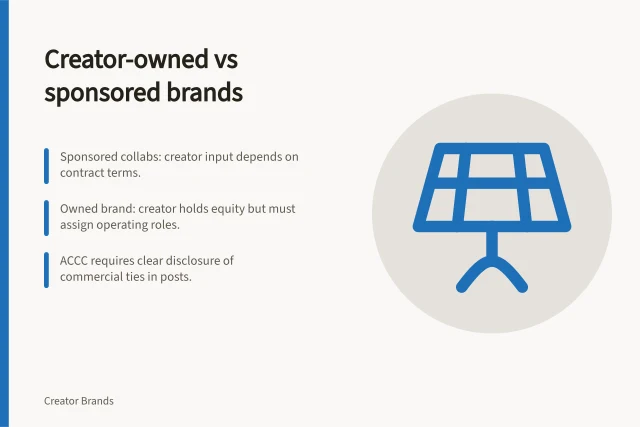
Compare creator ownership and sponsorship by product control, operating work, income, asset rights and the message buyers see.
Brand Positioning
Assess whether a creator product brand has the rights, people, supply, service and demand evidence for a defined low-activity period.
Brand Positioning
Describe prospective buyers by their product need, alternatives and constraints, then refine the profile with appropriately bounded research.
Brand Positioning
Read creator comments, product questions and early orders for what they actually show, without turning engagement into a sales forecast.
Brand Positioning
Make a creator product understandable on a shelf with clear product copy, accurate claims and a useful role for the creator story.
Brand Positioning
A familiar face can draw attention to a launch. It should not be the only clue to what is being sold. Test the design with someone who does not follow the creator …
Brand Positioning
Trace who holds and may use a creator brand’s trade marks, artwork, content and product assets as a partnership changes.
Brand Positioning
Preserve the claim, check product and order facts, assess patterns carefully and keep public conclusions within the evidence.
Brand Positioning
Write a product promise a new buyer can assess, then describe the creator’s actual role without overstating benefits or experience.
Brand Positioning
Build a creator launch sequence that explains the product, resolves buying questions and announces sales only when the offer is ready.
Brand Positioning
Decide which creator brand questions can be answered publicly, which need a private case, and how to make the hand-off reliable.
Brand Positioning
Check buyer understanding, brand expectations and delivery requirements before adding a new creator product category.
Brand Positioning
Connect the creator’s real contribution to a product decision, and keep the launch story accurate about the item customers can buy.