Brand Positioning
Part of Creator brand identity
Choosing a product name that can stand apart from the creator
A creator’s audience may recognise a personal name instantly. A first-time shopper may not. A product name should tell both groups what to look for and remain …
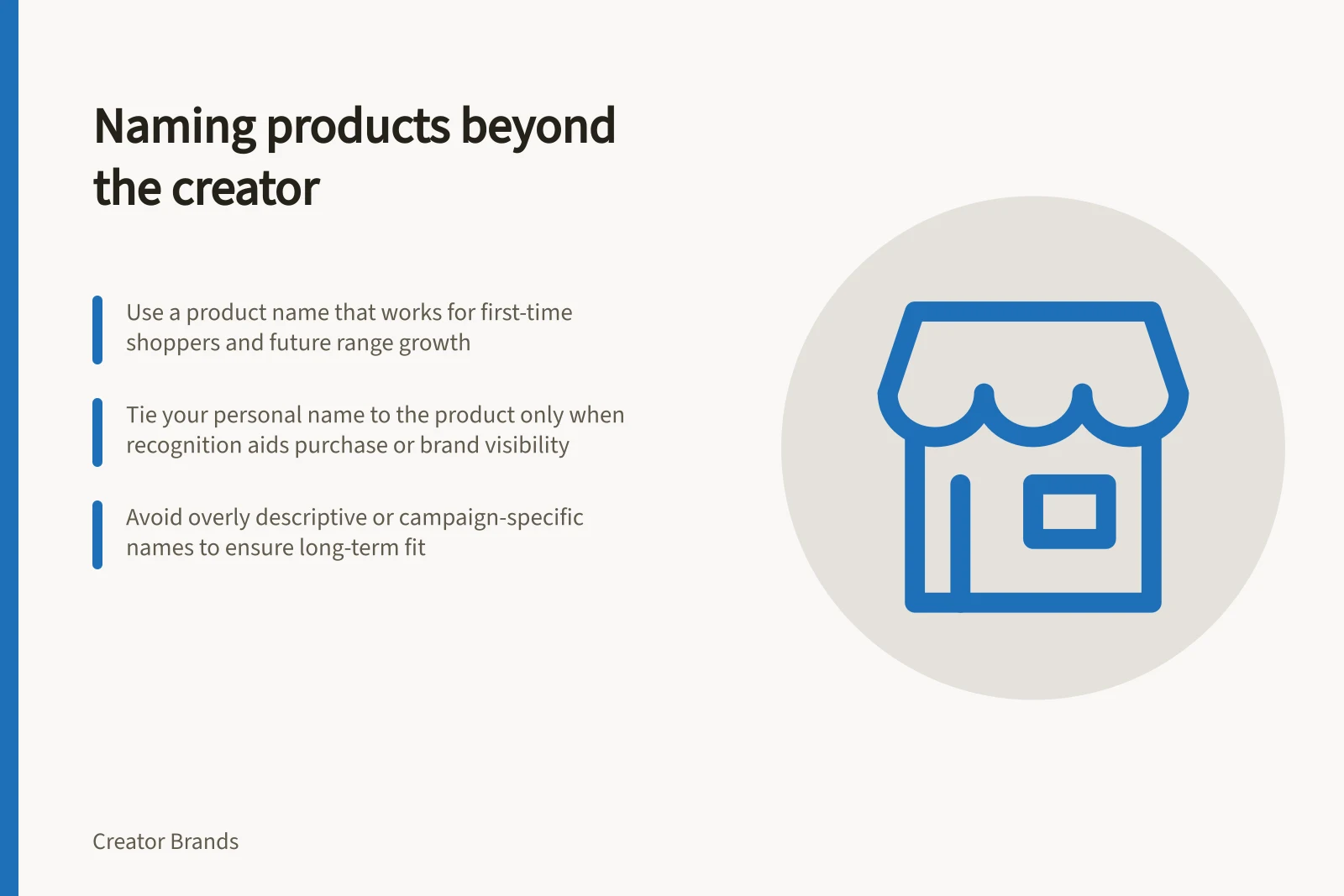
A creator’s audience may recognise a personal name instantly; a first-time shopper may not. Choose a product name that helps both groups identify the offer and still works if the range grows.
Start by writing down the product category, the distinction you want the name to carry and whether creator recognition matters at the point of purchase. This gives you a clear basis for deciding how closely the product name should connect to your personal name.
Keep your personal name in the product name when recognition helps shoppers identify the offer and you want the range visibly tied to you. Choose a distinct product name when first-time shoppers need a clearer cue or the range should make sense beyond the creator’s existing audience.
Draft candidates around the product category and the distinction you want to signal, rather than a temporary campaign. A name that is too descriptive can disappear among competitors, while one tied to a single campaign may not fit later products.
Toblerone combines Tobler, from founder Theodor Tobler’s name, with Torrone, the Italian word for honey and almond nougat. It illustrates one way to retain a founder connection while adding another association to the product name.
Run four checks on each candidate: say it aloud, ask someone to spell it after hearing it once, view it on a small package image and in a retailer’s product list, and check whether it still fits a second product. These tests show whether the name is easy to recall, clear in a listing and flexible enough to grow.
Compare candidates against the same questions: does the name fit the category, carry the distinction you want, and work without the creator beside it? Record the candidate, its intended use and who approved it so the reason for the choice stays clear.
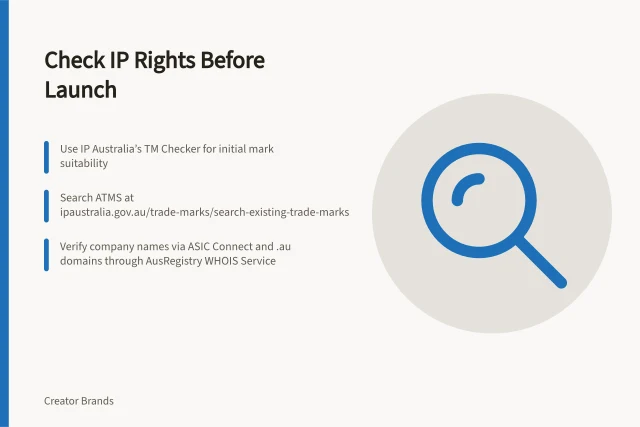
A social-handle or domain search can help with discoverability; IP Australia’s Australian Trade Mark Search covers registered and pending marks. Treat checking similar marks as a separate step from judging whether the name works for your audience.
When to Use Your Personal Name in the Product Name
- Use personal name when:Creator recognition helps shoppers identify the offer; range should visibly tie to you
- Use distinct product name when:First-time shoppers need a clearer cue; range should make sense beyond your existing audience
Key Resources for Protecting Your Product Name
- IP Australia – Trade Mark Search
- Check registered and pending trade marks in Australia
- Business.gov.au – Product Labelling
- Guidelines for labelling products under Australian law
- ACCC – False or Misleading Claims
- Rules on advertising and promoting products truthfully
- IP Australia – Choosing the Right IP Tool
- Guide to copyright, trademarks, and other protections