Product Development
Part of Building a product brand around a creator
Choosing a product category that fits the creator's expertise
Choose a creator product category by matching genuine expertise with a buyer problem, delivery capability and claims the team can support.
Choose a category where the creator's actual knowledge can improve a product decision for a defined buyer. Familiarity with an audience is a starting point, not proof of technical competence, customer demand or permission to make broad claims. The best first category is one the team can explain, deliver and support credibly.
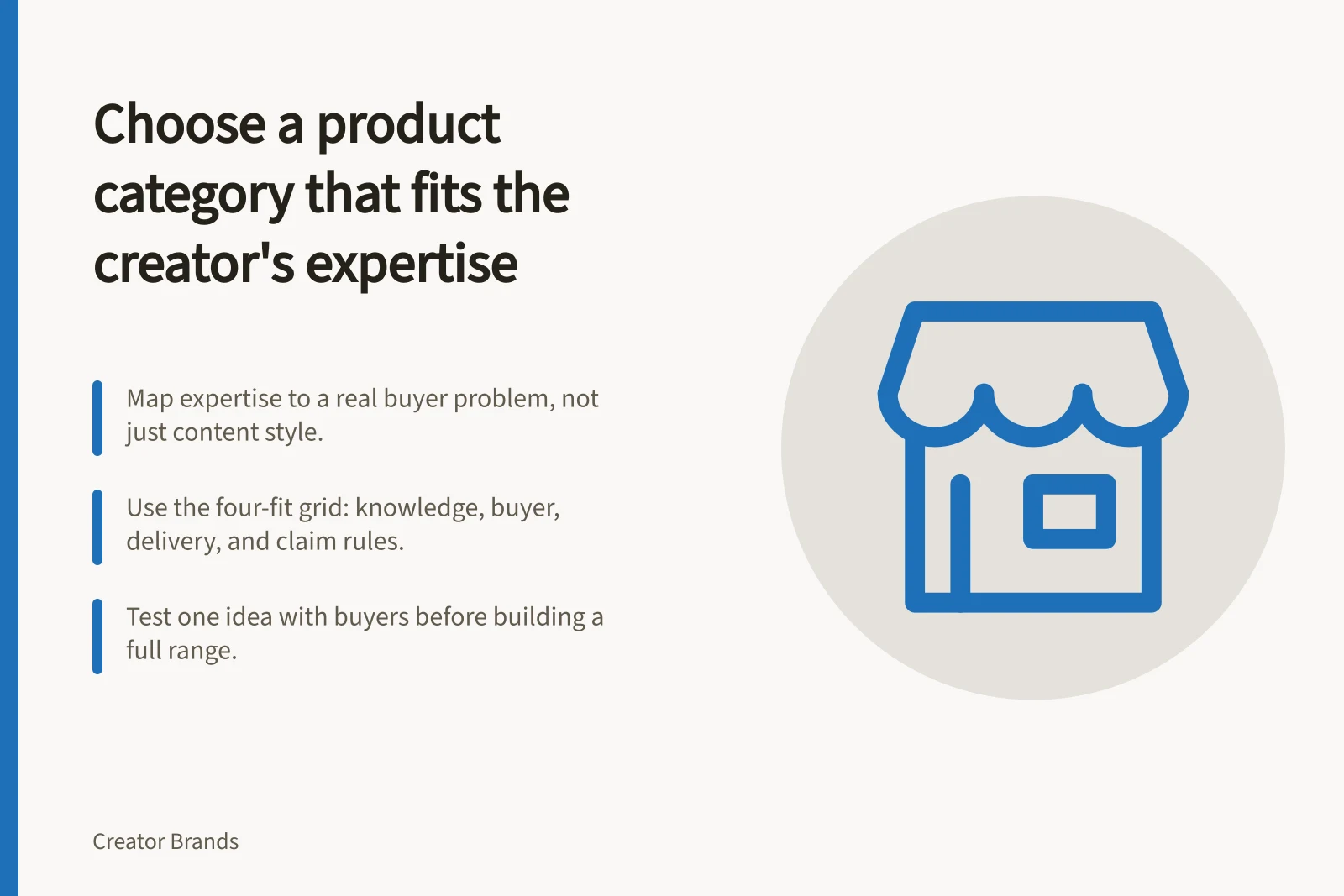
Map expertise to a buyer problem
List what the creator has repeatedly done, taught or used, then write the buyer problem connected to each activity. Be precise: making cooking videos describes content, while knowing which storage steps home cooks find awkward points to a problem that can be investigated.
Ask which part of the proposed product the creator could genuinely help design, assess or demonstrate.
Next, look outside the creator's following. Who faces that problem, what do they use now, and what would make a different product worthwhile?
A category is more promising when the buyer can understand its use without already knowing the creator. That tests the category's clarity, not its eventual demand.
Screen a short list on four dimensions
| Dimension | Question to answer | Reason to pause |
|---|---|---|
| Knowledge fit | What specific decision can the creator improve? | The connection is only visual or reputational. |
| Buyer fit | Can a buyer name the problem and an alternative? | The proposed item has no clear use or appeal for its intended buyer. |
| Delivery fit | Can the team source, check, explain and support the item? | A critical capability has no owner or partner. |
| Claim and rule fit | What safety, labelling and claim checks apply to this exact item? | The team cannot yet substantiate its promise or identify the relevant requirements. |
Use the grid to narrow choices, not to assign a scientific score.
A category with strong creator fit can still be a poor first launch if its quality and service demands exceed the team's capacity. Conversely, a straightforward item is not automatically a good choice if buyers cannot see why this brand should make it.
Screening a product category on four dimensions
- Knowledge fitWhat specific decision can the creator improve?
- Buyer fitCan a buyer name the problem and an alternative?
- Delivery fitCan the team source, check, explain and support the item?
- Claim and rule fitWhat safety, labelling and claim checks apply to this exact item?
Separate contribution from authority
A creator can contribute a design brief based on real use and work with qualified product specialists. Describe that division honestly.
A cooking creator, for example, might help define the size and cleaning needs of a kitchen organiser. That experience alone would not establish expertise to formulate an ingestible product. The distinction is hypothetical, not a recommendation for either category.
Be equally careful with the finished message. An image or demonstration can imply a result beyond what the product delivers, and Australian guidance expects product claims on packaging and social media to be accurate and supported.
Product safety and labelling requirements also vary with the item. Check the exact proposed category before treating a concept as ready to sell.
Pick the first investigation, not the whole range
Select one category and one buyer problem to research next. Write a brief covering the creator's genuine contribution, the product's intended use, comparable alternatives, capability gaps and any claims that would need evidence.
Then test whether potential buyers want that specific offer. If the answer is weak, change the idea before commissioning a full range.
The category choice is a working hypothesis. It becomes a credible brand direction when buyer feedback, product development and operational checks support the promise the creator is willing to make.
Steps to choose a credible first product category
- Select one category and buyer problemFocus on a single, well-defined opportunity for investigation.
- Draft a briefInclude creator's contribution, intended use, alternatives, capability gaps and claims needing evidence.
- Test buyer interestValidate demand before investing in full product development.
- Refine or pivot if feedback is weakChange the idea early rather than commissioning a full range.