Product Development
Part of Building a product brand around a creator
Testing whether an audience wants a product
Test a creator product idea with a defined offer, relevant buyers and meaningful actions while keeping feedback separate from actual orders.
Test a specific offer on understandable terms with people who might use it. A creator’s poll can reveal questions and objections, but by itself it cannot show how many followers will buy. The useful result is a decision to proceed, revise or stop, based on what people understood and did.
Define the choice you want to test
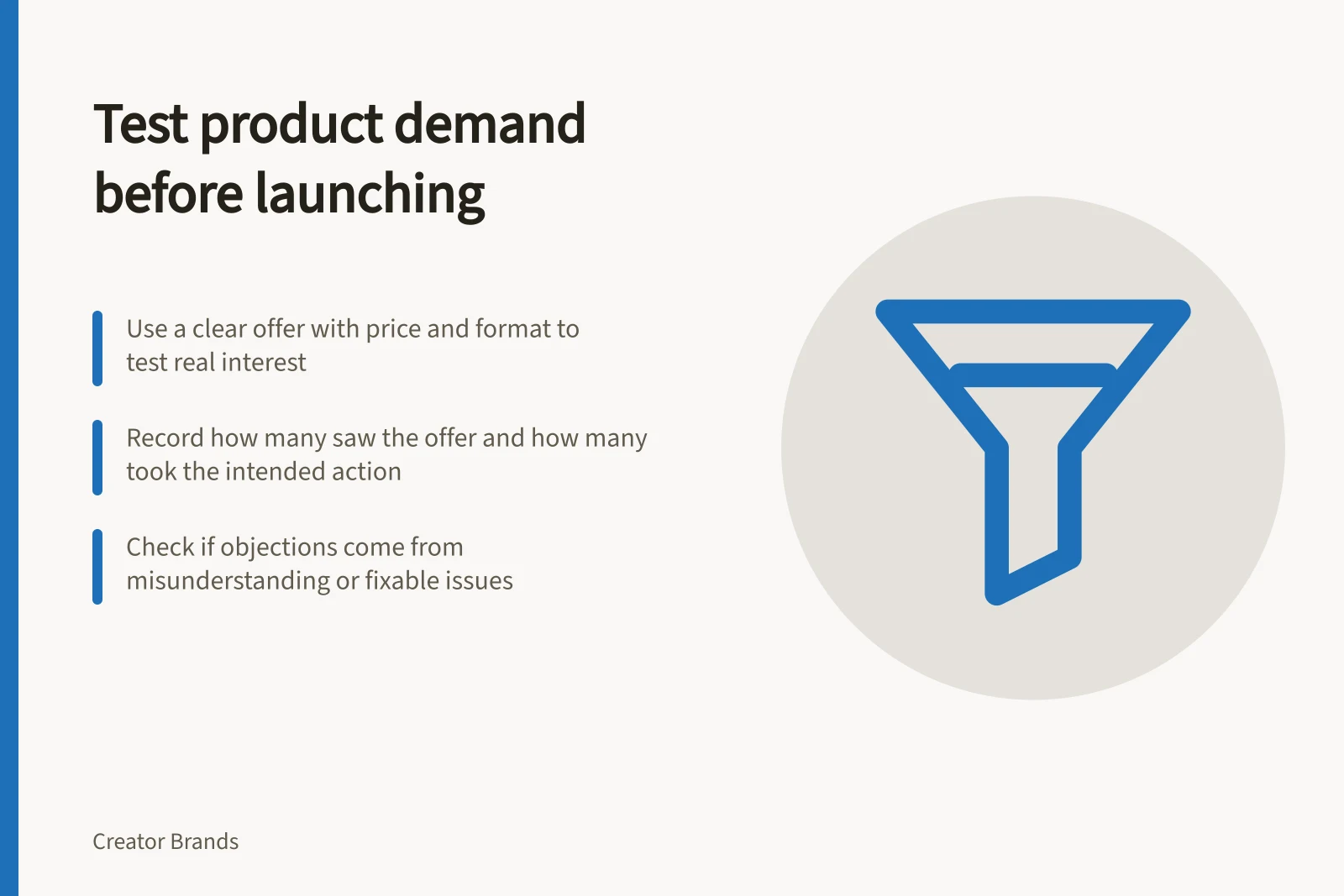
Write down the proposed buyer, the problem, what the product would include, a realistic likely price and the main alternative. Decide which uncertainty matters most: people may have the problem but already like an inexpensive solution, or want the benefit but find the proposed format inconvenient. One test should answer a decision, not collect general applause.
Prepare one plain description that all participants can see. Show material limits, delivery assumptions and what is still undecided. Do not ask whether people would buy an undefined “product from me”: that question mixes affection for the creator with interest in the item.
Listen before asking for approval
Speak with category-relevant people, including some who do not follow the creator. Ask what they use now, what it costs in money or effort, and when they last faced the problem. Then show the proposed offer and ask what they think it is, what they would compare it with and what might stop them choosing it.
Record how each person was recruited, whether they knew the creator and exactly what version of the offer they saw. Keep objections in their own words in working notes, but do not turn an interview into a testimonial for publication. A small interview set is useful for finding misunderstandings; it is not a representative estimate of Australian demand.
A follower group and a non-follower group can reveal different questions. If the offer needs the creator’s backstory to make sense, revise its explanation. If both groups understand it but reject the price or format, consider changing the product rather than posting the same pitch more often.
Offer a meaningful next action
Choose an action suited to the product’s readiness. An interest form can invite someone to hear when details are final. A page with the proposed price can show whether people continue after seeing the terms.
If the business has a saleable item that has passed relevant checks and a credible supply plan, completed orders are stronger evidence of a purchasing choice. Do not take payment on a supply promise the business cannot support.
Keep these signals separate. A like shows attention; a survey answer describes a stated preference; joining a waitlist requests an update; a completed order records a transaction. Even an order may be a one-off gesture of support. None should be silently converted into a forecast for all followers.
For each exercise, record how many people saw the same offer, how many took the intended action, the recruitment route and the main reasons people declined. If the audience is self-selected or the offer changes midway, say so when reading the result. A percentage without its denominator and test conditions creates false precision.
Decide what the evidence changes
Set the decision before you look at the responses. Proceed if the problem, product explanation and buying terms survive scrutiny and the next production commitment is proportionate to the evidence. Revise if people understand the need but object to a fixable part of the offer. Stop or return to research if apparent interest exists mainly when the creator asks for support.
This test concerns willingness to consider or buy an offer. Later prototype work must check whether the item itself performs as intended. Keep those decisions separate: demand for an idea does not approve the finished product.