Brand Positioning
Part of Creator brand performance reviews
Deciding whether the product brand can operate independently
Assess whether a creator product brand has the rights, people, supply, service and demand evidence for a defined low-activity period.
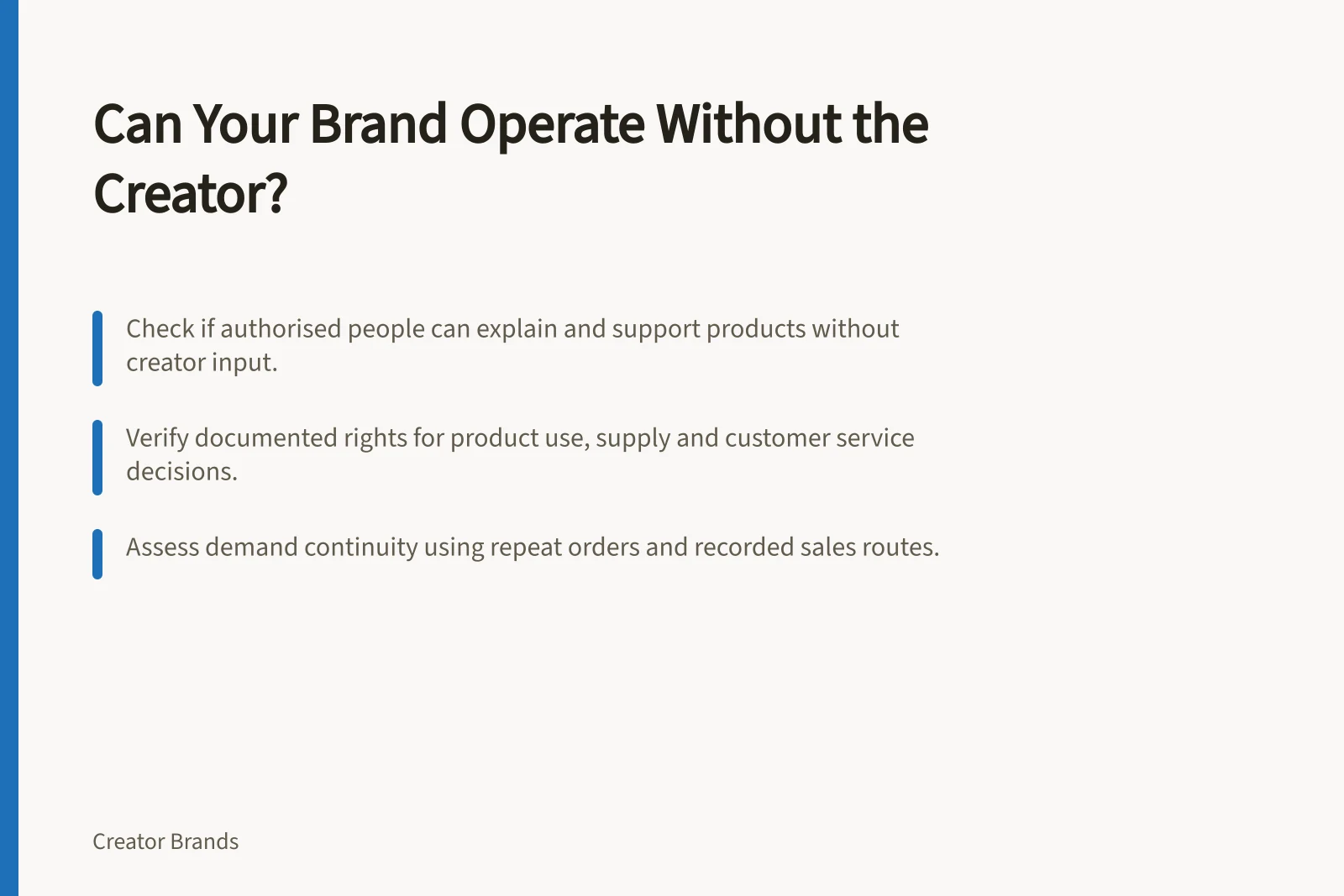
Decide whether a creator product brand can operate independently in a defined scenario: can authorised people explain, sell, supply and support its current product during a period without new creator involvement? The creator may remain part of the brand. The decision rests on actual rights, operating authority and evidence for the proposed commitment.
Define the scenario
Specify whether the review concerns an ordinary quiet period, a longer absence or a possible partnership change; each requires different rights and commitments. Identify the products, channels and customer obligations that must continue. An immediate absence handover needs its own continuity plan; this review judges the continuing operating model.
Check agreements for any essential use of the creator's name, image or content. A licence permits defined use without transferring ownership; an assignment transfers ownership. Access to a file or account does not establish either right. Record permitted uses, term and decision-maker for the scenario rather than infer permission.
Check the operating capabilities
| Capability | Evidence to inspect | Reason to hold the independence claim |
|---|---|---|
| Product explanation | Current product page, pack and supported claims | Buyers need a new personal endorsement to understand the item. |
| Rights and authority | Agreements and approval routes | An essential use or correction lacks an authorised decision-maker. |
| Supply | Current specification, accepted stock and supplier contact | Replenishment depends on an undocumented personal decision. |
| Orders and service | Store access, fulfilment record and customer contact route | Paid orders or complaints wait in a personal inbox. |
| Demand and economics | Repeat orders, recorded routes and order contribution | The next commitment assumes an untested creator posting burst. |
This proposed decision grid is not a finding about a particular brand. A business may serve existing customers while still relying on licensed creator identity for its positioning.
Key Criteria for Independent Brand Operation
- Product explanation available without creator inputYes/No
- Rights and authority documented with clear decision-makerYes/No
- Supply chain independent of personal decisionsYes/No
- Orders and service routed through authorised accountsYes/No
- Demand evidence from repeat orders and alternative routesYes/No
Examine the scenario using records
Trace an ordinary customer journey through the current product page, order process and service route. Identify who is authorised to correct a listing, confirm saleable stock, handle routine fulfilment and escalate a product concern. Record missing access and unclear authority. This is a suggested exercise, not one already performed.
Where systems permit, give staff only the access their roles need and use separate authorised accounts. Guidance from the Australian Cyber Security Centre covers cloud shared responsibility for individuals and small and medium businesses; actual responsibilities depend on the service. A creator's personal login should not be the sole operational route.
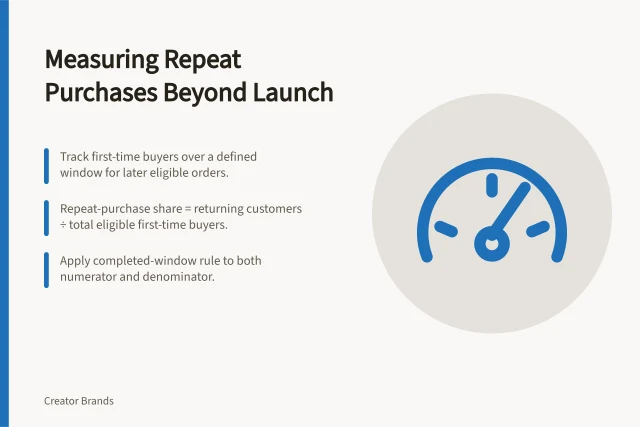
Review commercial evidence from comparable periods: eligible repeat orders, orders through other recorded routes and contribution after fulfilment. Keep unknown routes, stock changes and campaigns visible. Sales in a quiet week do not prove demand would persist indefinitely without creator activity.
Record the decision and limits
Call the brand ready for the defined scenario only when essential rights and owners are documented and the proposed commitment remains affordable under a cautious demand case. Use ready with limits when existing orders can be served but a new campaign, product change or licensed asset use must wait. Use hold and resolve when a necessary right, supply decision, service route or cost record is missing.
Record the scenario, evidence, limits, owner and review date. If a partnership change is contemplated, obtain qualified advice on its rights and outstanding customer commitments before acting.