Launch Economics
Part of Creator brand performance reviews
Reviewing dependence on one creator channel
Assess creator-channel concentration using recorded orders, contribution, unknown routes and a defined low-activity scenario.
Review dependence on one creator channel by measuring how much recorded order activity is associated with that route, how much remains unknown, and what commitment the brand could support during a period with little creator activity. Follower count and an attribution report alone cannot answer this.
Define the route and outcome
Name the creator-controlled route: an account, newsletter, platform presence or set of appearances. Record who controls access and what activity occurred in the period. Several reported channels may still share one dependency if they all require the same person to create or approve content.
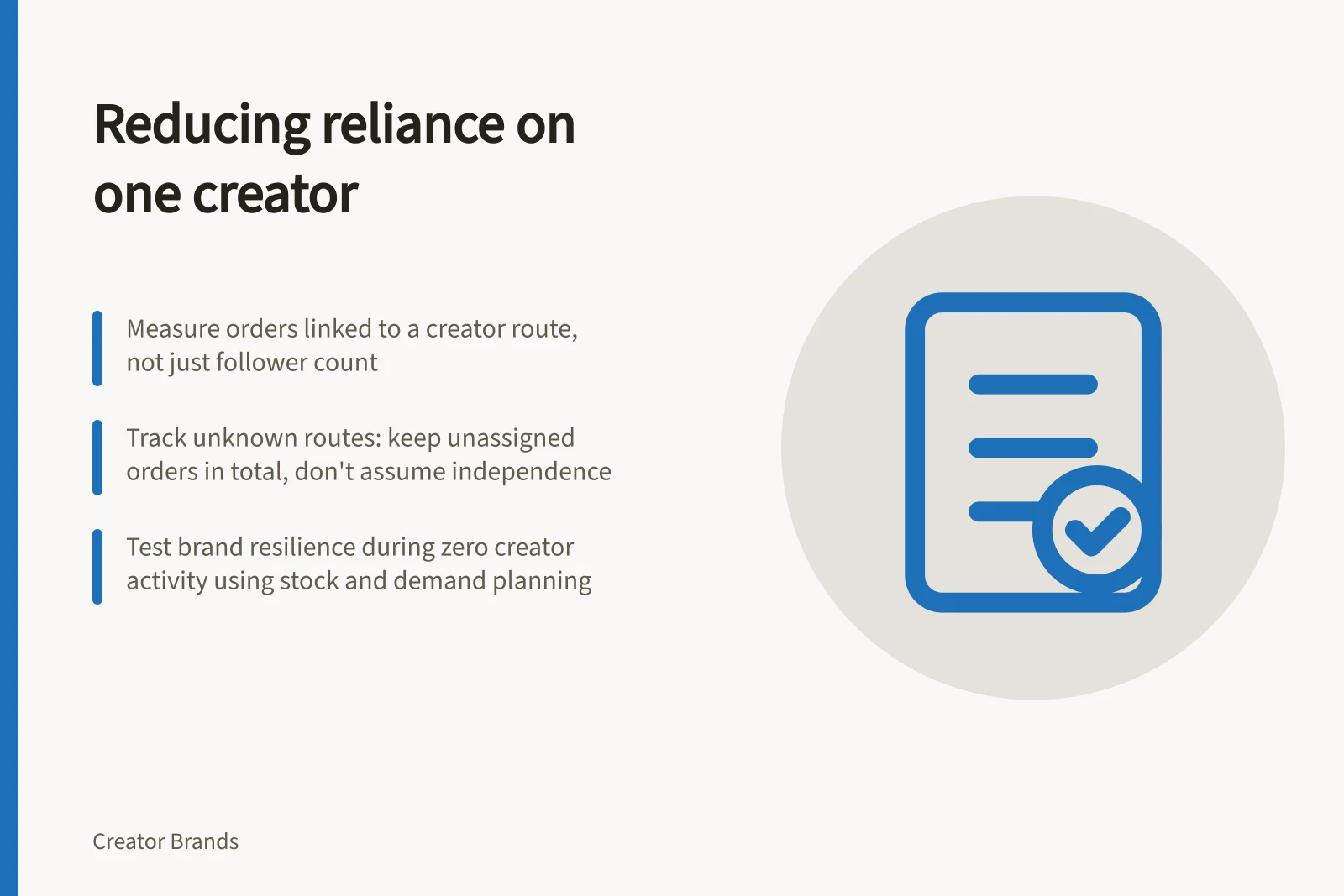
Choose the outcome before comparing routes. Sessions describe visits; placed orders describe transactions; retained order contribution adds the costs of serving them. Use order records for the purchase population. Keep orders with unknown route in the total rather than assigning them to either creator or independent demand.
Treat attribution as recorded credit
Tag campaign destinations consistently and document changes to links. In Google Analytics, record the traffic-source dimensions and report scope used. Direct traffic has no clear referral source. None of these fields says whether a buyer follows the creator.
Shopify reports marketing channels and their results using measures such as sales, sessions, average order value and conversion rate. Its reported sales and orders attributed to marketing concern online-store traffic attributed to marketing campaigns. State the report, rule and unknown share beside any channel percentage.
Someone might see a creator post, search for the brand later and order. Another buyer might click a creator link after already deciding to buy. Those paths illustrate why reported credit is not proof of cause. Do not label search or direct orders as independent of creator influence without separate evidence.
Size the exposure
For one period, show eligible orders and contribution associated with the creator route, other recorded routes and unknown routes. Note stock, price and promotion changes before comparing periods. A change in tagging can also change the apparent mix.
Then consider a defined period with no new visits from the main creator route. Which existing customer orders, store functions and other demand routes could the business still serve? This is a planning scenario, not a prediction of lost sales. If the proposed stock or spending commitment depends on another posting burst, reduce it or collect more evidence before committing.
If measurement is weak, repair tagging and reconcile order identifiers. If concentration is commercial, test another suitable way for buyers to discover the product and check whether its orders contribute after costs. If control is the issue, document who can maintain the store and customer contact route. Whole-brand independence also requires rights, supply and service review beyond this channel measure.