Retail Expansion
Part of Creator brand reputation risk
Keeping customer obligations clear during a public dispute
Keep paid orders, delivery updates and Australian consumer guarantee decisions separate from a creator brand’s public dispute.
A dispute involving a creator or brand does not suspend existing customer orders or applicable product rights. Identify who sold each item, which buyers are affected and what each case concerns. Give customers a direct route to accurate order information and assessment while the public dispute is handled separately.
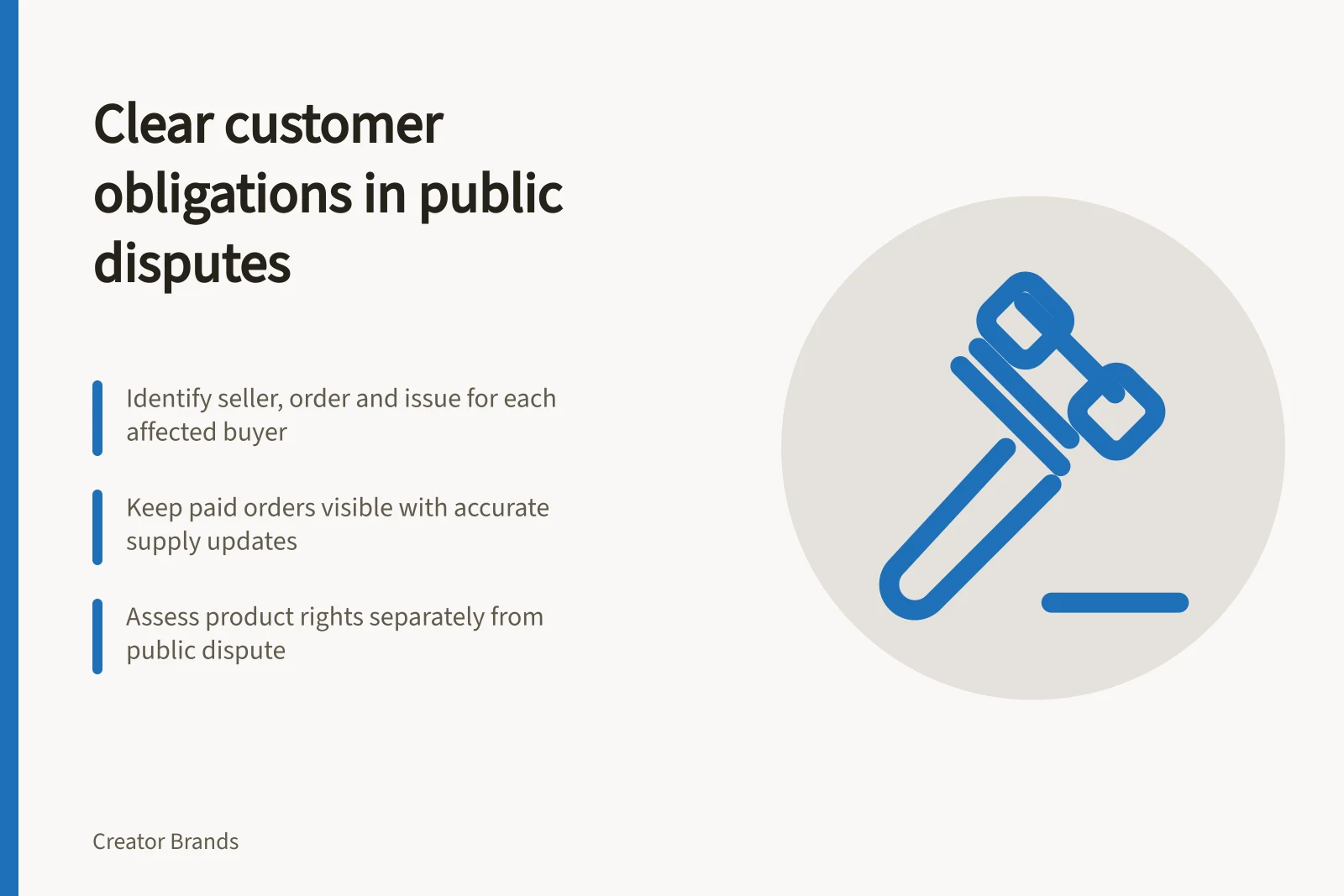
Identify the transaction first
Record what the customer bought, when, from which seller and what has happened since. An unfulfilled order, a delivered item with a possible fault and a change-of-mind request raise different questions. A brand selling through its own store and through retailers should not assume every buyer purchased from the same seller.
Keep order numbers, addresses and other personal details out of public comments. A creator can direct a customer to the relevant seller’s service route, but a public statement cannot decide an individual case. If a complaint reaches the wrong inbox, make sure it reaches someone who can identify the purchase and respond.
Keep paid orders visible
For affected orders, compare the original supply promise with the position the seller can now support. Tell buyers directly which item or variant is affected, what timing is known, what remains uncertain and when they will hear more. A general post may not reach a buyer who has already paid.
Give buyers clear information about known supply delays and proactive updates after purchase. Rules apply to accepting payment without intending to supply, and the ACCC can investigate possible breaches. If a new date lacks a sound basis, give an update point instead of presenting it as a dispatch promise.
Assess product rights separately from the dispute
When a customer reports a possible fault, assess the claim against applicable consumer guarantees. Australian Consumer Law includes rights to repair, replacement or refund, as well as compensation for damages and loss.
A voluntary change-of-mind policy is separate from consumer guarantee rights. Keep a change-of-mind request distinct from a reported consumer-guarantee issue. Nor should a public caption promise the same remedy to everyone before their cases are assessed.
If a report suggests a possible product hazard, preserve the details and escalate it promptly for qualified assessment. Any reporting or recall decision belongs in the applicable product safety process, regardless of the surrounding dispute.
Change-of-mind vs. consumer guarantee claims
- Change-of-mind requestVoluntary policy; not required by law. May be subject to fees or restocking charges.
- Consumer guarantee claimMandatory under Australian Consumer Law. Includes right to repair, replace or refund for faulty goods.
Key consumer rights under Australian Consumer Law
- Right to repair
- Free repair if the product is faulty
- Right to replacement
- Replacement if repair is not possible or reasonable
- Right to refund
- Full refund if repair or replacement is not feasible
- Compensation for loss
- Available for damages caused by faulty products
Follow each case through
Record the product version, issue, facts checked, responsible person, customer response and next action. Keep allegations about the creator out of an order decision unless they actually affect that order. When a public product or delivery statement changes, give staff the current version.
Review open cases until the promised action is complete. A customer should be able to learn what is happening with their purchase and receive the assessment or solution the circumstances require without following the public argument.