Launch Economics
Part of Creator brand launch campaigns
Handling a delayed launch transparently
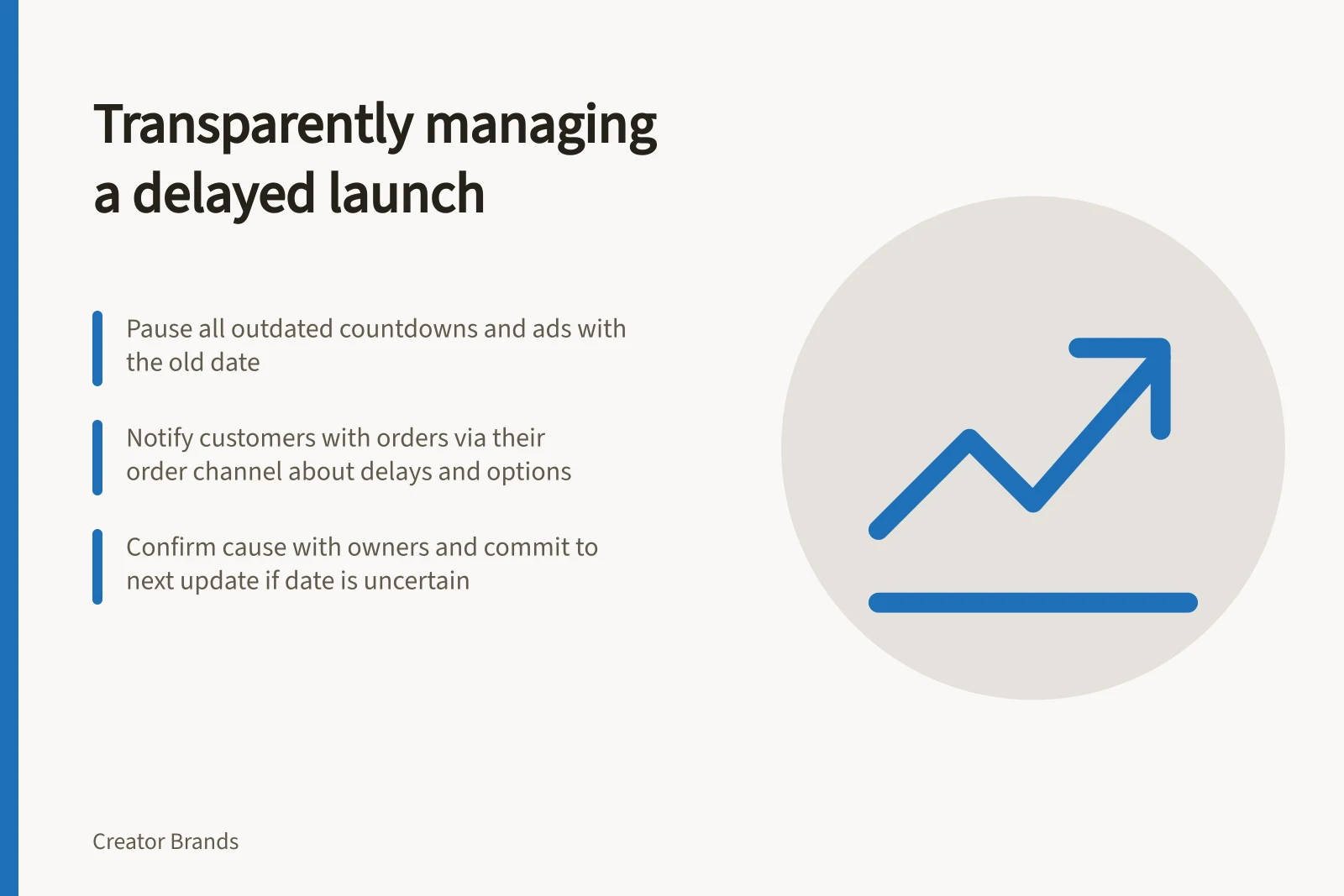
Pause outdated launch claims, update customers directly when orders are affected and communicate a new date only when it can be supported.
When a creator product launch slips, say what has changed, what is known and when people will hear more. The response depends on whether the business has only announced a date or has already taken payment. Customers with orders need direct information about their purchase, not just a creator's public update.
Stop the outdated promise first
Pause scheduled countdowns, sales posts and ads that still carry the old date. Update the product page and checkout before sending people there again. Check pinned posts and automated replies too: a corrected story will not help someone who reaches an unchanged “available tomorrow” page.
Confirm the cause with the person who owns it. Production issues, quality holds, freight delays and checkout problems require different next steps. Give a plain explanation at the level the team can verify. Do not turn an estimate from a supplier into a guaranteed new launch date. If the date remains uncertain, commit to a date for the next status update instead.
Separate audience updates from order updates
Before sales open, a concise public message can state that the opening has moved, what remains true about the product and when the next update is due. People on an interest list may also need a direct update if they were promised early access at a specific time. Avoid using the delay as a fresh scarcity hook.
After payment has been taken, identify the affected orders and contact those customers through a channel tied to the order. State which item or variant is delayed, the current expected delivery timing or the reason it is still unknown, and how the customer can reach support.
Explain the solutions available for that order without suggesting that store policy removes applicable consumer rights. Public creator content can acknowledge the issue and direct customers to the proper service route; it should not ask them to post order details in comments.
ACCC information says it educates consumers and businesses about rights and responsibilities under consumer law, accepts reports where people consider a business is doing something it shouldn’t, and can investigate and may take compliance or enforcement action if a business breaks the rules about accepting payment without intending to supply. The ACCC also says it does not resolve individual disputes about a failure to supply or delayed supply. For a launch, a paused checkout or a revised, clearly described offer may be a safer response than continuing a promise the business cannot currently support.
Consumer rights under Australian law
- Right to refund if goods not delivered
- Under Australian Consumer Law (ACL)
- No obligation to accept false claims
- Businesses must not make misleading statements about supply
- Enforcement by ACCC
- Can investigate breaches and take compliance action
Give the team one current account
Write a brief internal status note: affected products and orders, confirmed cause, current timing, customer options, next update date and owner. Use it to align the creator, support team, product page and any partner posts. Mark uncertain points as uncertain. Do not ask a creator to improvise technical or delivery assurances in a livestream.
Set a trigger for the next decision. For example, the team may need a passed quality check or confirmed receipt of saleable stock before naming a new opening date. When that trigger is met, verify the store and fulfilment plan again before restarting promotion.
Follow through after the announcement
Keep the promised update cadence even if there is little new information. Say what remains unresolved and what is being done to check it. If the estimate changes again, correct it promptly and contact affected customers directly. Record the messages sent and the order groups they covered so support can answer consistently.