Brand Positioning
Part of Creator brand customer service
Setting a service process separate from social comments
Decide which creator brand questions can be answered publicly, which need a private case, and how to make the hand-off reliable.
Give a creator brand one private service route for order and product cases. Use social comments to recognise and route those cases.
A comment thread can answer a public question. It is a poor place to collect purchase details, assess a fault or promise an individual remedy.
Decide what stays public
Answer general questions publicly when the answer is verified and useful to other buyers: what a variant includes, where to find care instructions or which contact route handles a delivery problem. Keep the answer consistent with the current product page.
If the question reveals that a listing or creator caption is wrong, correct the original claim as well as the reply.
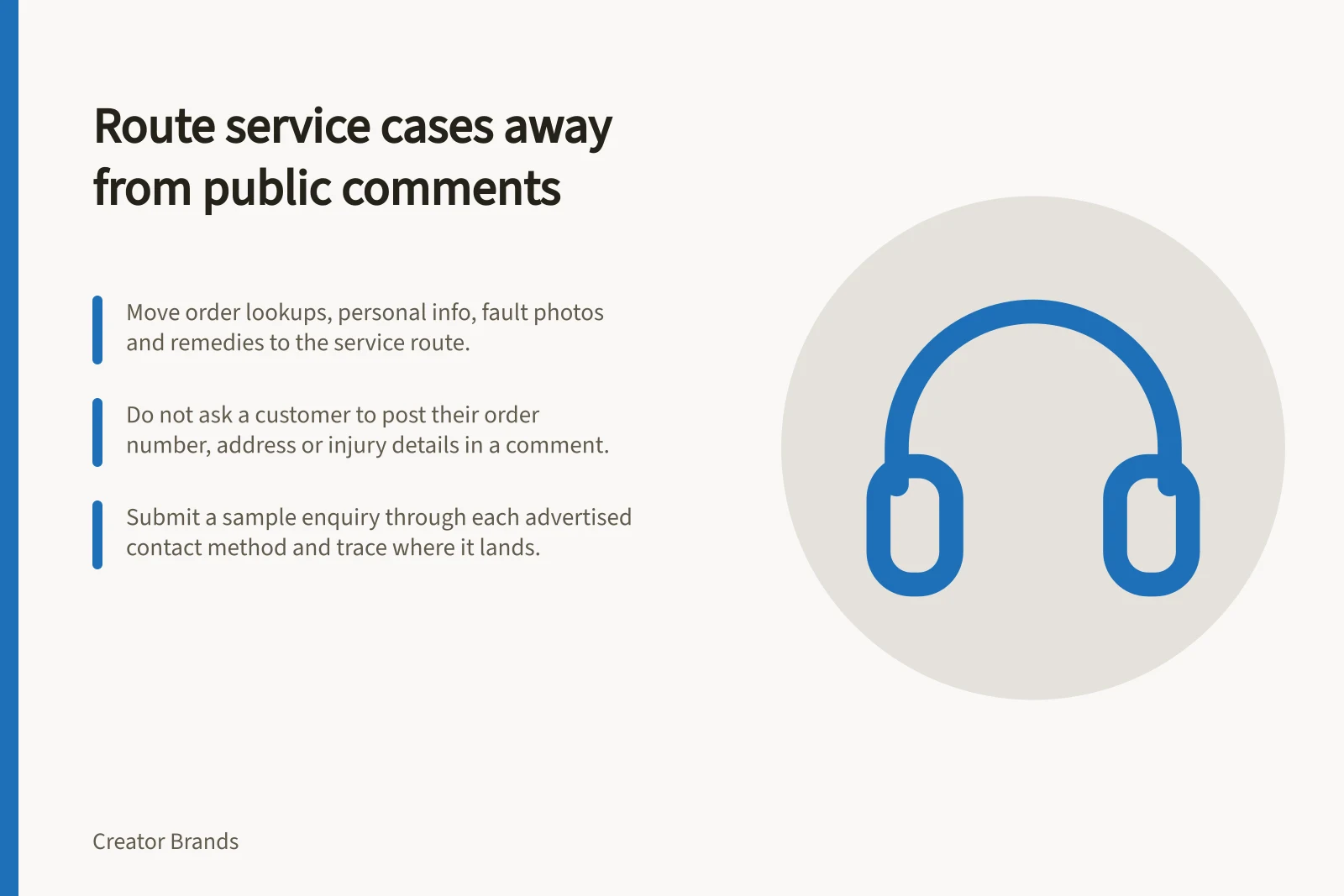
Move a case to the service route when it needs an order lookup, personal information, photos of a fault, a remedy decision or repeated follow-up. Record and escalate a possible safety concern promptly.
The public reply can acknowledge the report, give the official contact method and explain what information to send privately. Do not ask a customer to post their order number, address or injury details in a comment.
What stays public versus what moves to a private service route
- Public replyGeneral product questions; verified answers useful to other buyers; corrections to a wrong listing or caption; acknowledgement of a report
- Private service routeOrder lookup; personal information; fault photos; remedy decision; repeated follow-up; possible safety concern
Make the hand-off dependable
Publish the service address or form on the store, order confirmation and relevant social profiles. Tell customers what the team can handle there.
Assign someone to monitor comments on the creator and brand accounts, including posts that remain active after a campaign ends. That person needs a way to create or flag a case, not just stock replies.
A hand-off record should show where the comment appeared, what was reported, whether the customer has contacted support, the case owner and the next update due. Do not mark the matter resolved merely because the brand replied publicly.
If a customer cannot reach the offered route, fix it and offer another practical way to contact the seller.
For a hypothetical comment saying, “The lid broke and I cut my hand,” a public response could direct the person to the service team without debating their use of the item. The internal hand-off should preserve the report and alert the safety owner.
From social comment to service case
- Monitor commentsCover creator and brand accounts, including posts that stay active after a campaign ends
- Reply publiclyGive the official service contact method and explain what to send privately; do not ask for order numbers, addresses or injury details in a comment
- Create or flag a caseThe person monitoring comments needs a way to open or escalate a case, not just post stock replies
- Record the hand-offWhere the comment appeared, what was reported, whether the customer has contacted support, the case owner and the next update due
- Keep the case openDo not mark the matter resolved only because the brand replied publicly
- Fix failed routesIf the customer cannot reach the offered route, fix it and offer another practical way to contact the seller
Give staff boundaries and authority
Agree who can answer a general product question, inspect an order, authorise a routine remedy and escalate a possible hazard. Provide current product and stock information so replies do not contradict checkout.
If the creator sees a difficult comment first, they can flag it and direct the customer to the seller’s route. Their personal inbox should not become the only place a case exists.
Moderate comments under a clear policy. Address false or misleading material on the business’s social pages, but do not remove genuine negative reviews merely because they are unfavourable.
The ACCC has signalled continued scrutiny of misleading online reviews, and businesses must not mislead or deceive consumers under the Australian Consumer Law.
Check the route after launch
Submit a sample enquiry through each advertised contact method and trace where it lands, who sees it and how a reply is recorded. Repeat after a platform or staffing change.
Review unanswered cases and comments directed to support that never became cases.
Test the service route after launch
- Submit a sample enquiry through each advertised contact methodTest
- Trace where it landsTrace
- Confirm who sees itConfirm
- Check how a reply is recordedCheck
- Repeat after a platform or staffing changeRepeat
- Review unanswered cases and comments directed to support that never became casesReview