Product Development
Part of Creator brand customer service
Handling product complaints without treating them as personal attacks
Respond to creator brand product complaints by establishing the facts, assessing remedies and giving a clear next step without making the issue personal.
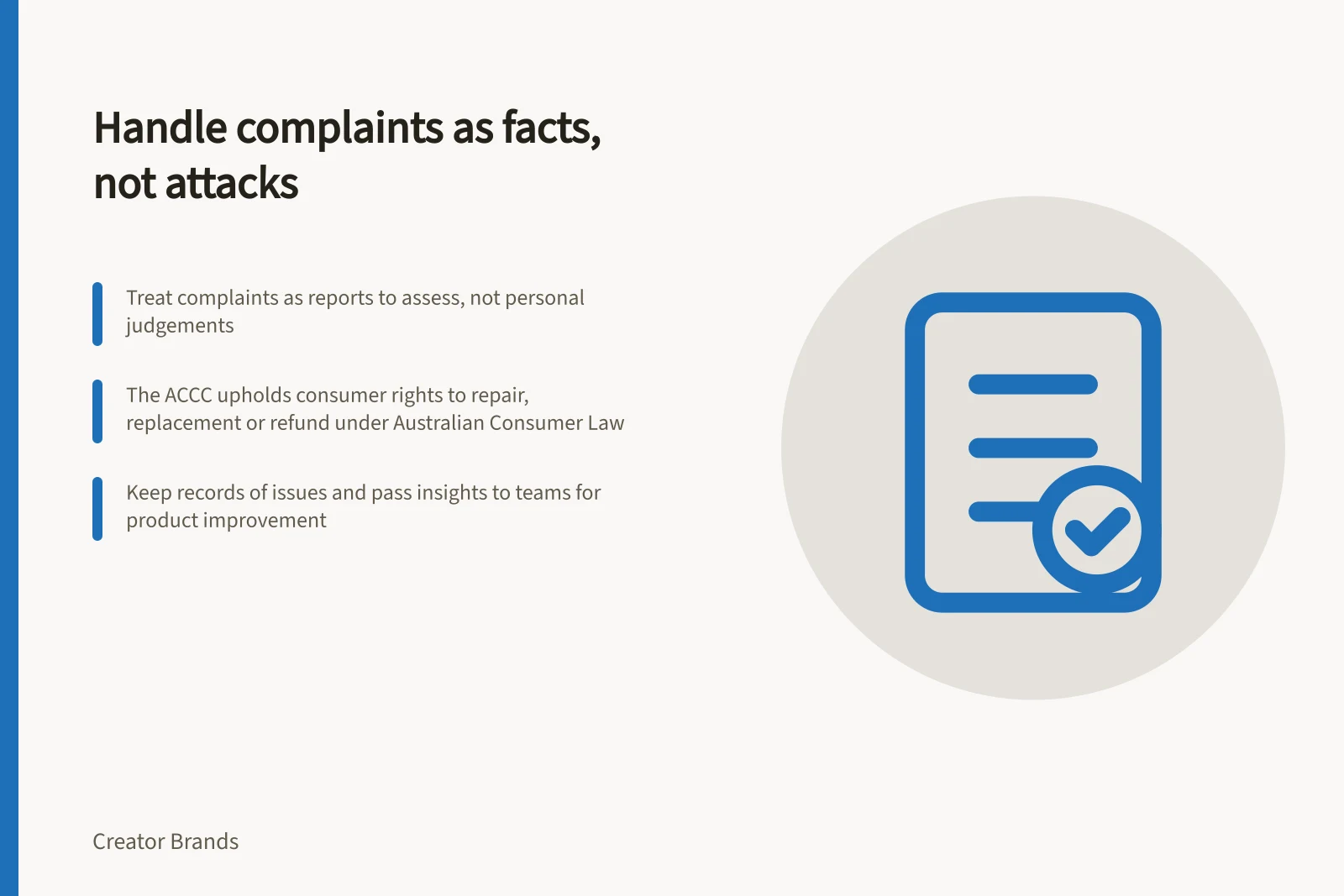
Treat a complaint as a report to assess, not a judgement of the creator. Establish what happened, consider the customer’s consumer-guarantee rights and explain the next step without arguing about tone or intent.
Separate the report from its tone
Identify the practical issue first: the item did not arrive, a component failed, the description did not match, or the customer could not get help. Ask only for details needed to identify the purchase and assess the issue.
Keep the customer’s account in the case record, including the product version and relevant photos when available. Do not dismiss a report because it is angry or because the customer is unfamiliar with the creator.
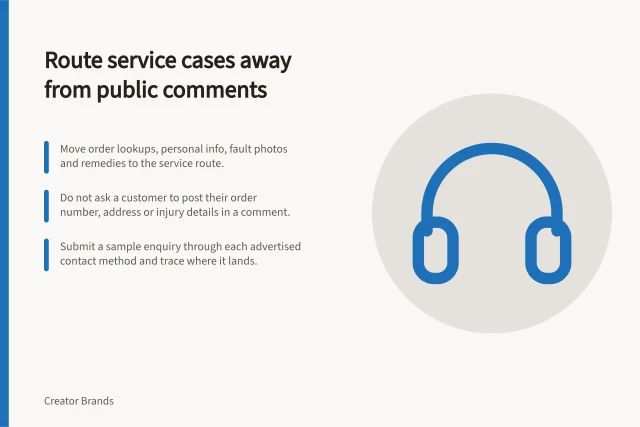
If the complaint is public, acknowledge it without discussing private order facts. Move the assessment to the seller’s service route and give the customer a date for the next update. Defending the creator’s intentions does not explain what the business will do.
Assess the product problem
Check the order, the description and the item the customer received. Work out whether the report concerns a mismatch, damage, use instructions, delivery or a possible hazard. If you need more information, explain what you need and why.
The ACCC describes consumer rights to a repair, replacement or refund for a faulty product or service. Assess the reported fault and the purchase details before deciding what response is appropriate; do not promise the same outcome for every complaint or demand proof of a manufacturing cause before considering a consumer-guarantee claim.
The Australian Consumer Law is relevant to accurate business responses: the ACCC says businesses must not mislead or deceive consumers. The ACCC does not resolve individual disputes or give legal advice about a consumer’s right to a repair, replacement or refund.
Give staff a route to someone who can assess uncertain cases. A customer can report a concern to the ACCC if they consider a business is doing something it should not; the ACCC uses reports to inform its education, compliance and enforcement work and may investigate misleading statements about rights. It does not decide an individual remedy dispute.
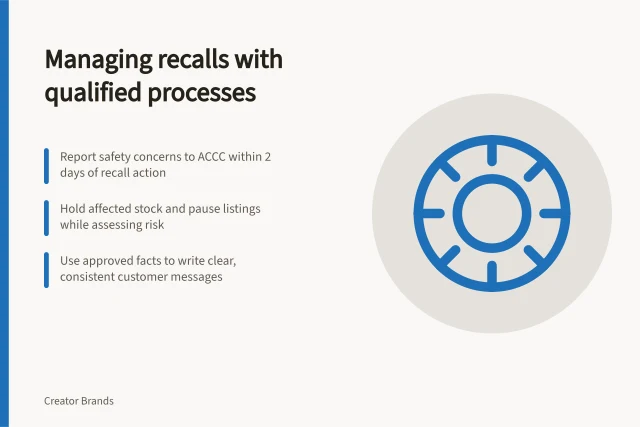
Escalate a possible safety issue promptly. Preserve the report, identify potentially affected products and have a qualified person assess the risk; do not describe a product as safe or the issue as isolated before that assessment. If you become aware of a death, serious injury or illness, submit a mandatory report within 2 days.
Consumer rights under Australian Consumer Law (ACL)
- Faulty product
- Right to repair, replace or refund
- Mismatched description
- Right to a remedy if item doesn’t match what was advertised
- Safety hazard
- Mandatory reporting within 2 days if death, serious injury or illness occurs
- Misleading advertising
- ACCC may investigate; businesses must not deceive consumers
Reply with ownership and a next step
A useful response acknowledges the reported problem, states what the business has confirmed, explains the next action and gives a date for an update. If the business made a mistake, say what it will correct; if the cause is unknown, say so. Avoid arguing about motives or offering an unverified technical explanation.
Staff can write: “Thanks for explaining the problem. We’re checking the order and product details so we can assess it. We’ll update you by [date].” If more information is needed, add what is needed and why.
The creator can acknowledge the concern and direct the customer to the seller’s service route. They should not decide remedies through direct messages or publish details from a private case. If a public claim was wrong, correct it where it appeared while helping the affected buyer.
Keep feedback available for learning
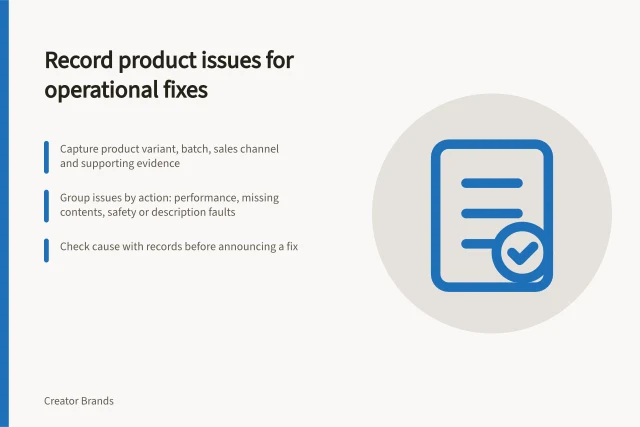
Keep the case open until the agreed action is completed and the customer has been told the outcome. Record the reported problem, product version, checks made, agreed action, completion and update sent; keep the customer informed if the next step changes.
Note whether the complaint points to a wider product, packing or description issue, and pass that observation to the relevant team. When responding to reviews, keep information accurate: the ACCC says businesses must not mislead or deceive consumers under the Australian Consumer Law.