Retail Expansion
Part of Creator brand customer service
Recording the product issues that need an operational fix
Build a useful product issue record, distinguish reports from causes, assign an owner and check whether a correction worked.
A service team should record enough about each product issue to decide whether it is one customer's case or a fault in the item, description, packing or fulfilment process. Resolve the customer's immediate problem, then give a named operational owner the evidence to investigate the wider issue. Complaints with no decision owner are only an archive.
Use a record that can be compared
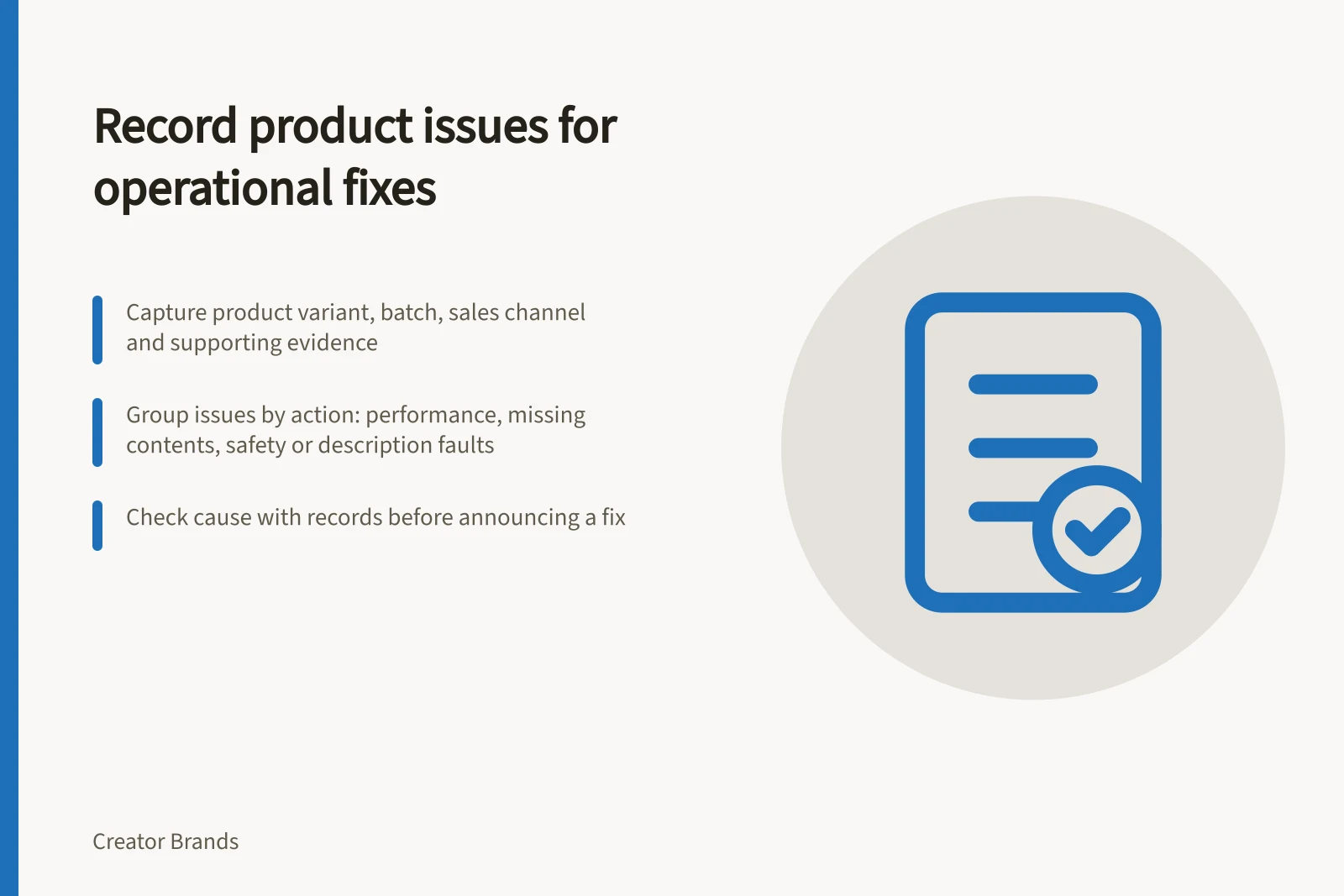
For a product-related case, capture the report date, product and variant, version or batch if known, sales channel, observed problem, supporting evidence, customer outcome and current owner. Keep the customer's words separate from the team's proposed cause. “Zip detached during first use” is a report; “supplier used the wrong material” is a hypothesis until checked.
Record unknown fields as unknown. An order number may identify what was sold without establishing the manufacturing batch. If buyers are asked for photographs or purchase information, collect what is needed for the case and protect their personal details.
Where the Australian Privacy Principles apply, the business must take reasonable steps to secure personal information and, subject to applicable exceptions, destroy or de-identify it when it is no longer needed for a permitted purpose.
Group issues by the action they suggest
Sort reports into working groups such as product performance, missing or incorrect contents, misleading description, packaging damage, instructions and possible safety concerns. Keep delivery faults visible without mislabelling them as manufacturing defects.
An issue record should state the suspected product scope, linked cases, severity, evidence available, owner, immediate containment action and next decision date.
The case count describes reports received, not a defect rate across units sold.
Do not use volume as the only trigger. A repeated cosmetic difference might justify checking a production run. A single credible account of injury or hazardous failure needs prompt safety assessment. If affected stock is held, note which units and sales channels are covered so it is not released by mistake.
Check a cause before announcing a fix
Give the issue owner a question to answer. For repeated missing parts, compare pick records, pack instructions and retained or unsent stock. For a description mismatch, compare the live listing, packaging and saleable item. For a suspected batch fault, examine the approved specification, change record and inspection evidence.
Record the result as confirmed, unresolved or ruled out, with the evidence used. A supplier's assurance is useful information but does not automatically settle what customers received. If a proposed correction changes materials, function, warnings or claims, have the appropriate product and safety people review it before release.
Close both loops
An operational issue is not closed when the first customer receives a replacement. Record the correction, affected units or listings, person who approved it and a check that would show whether it worked.
Update support instructions so later customers receive the same accurate information. Contact affected buyers directly when the issue or remedy calls for it.
Review later cases against the corrected version. If the same problem continues, reopen the investigation and reconsider its scope.
Australian product safety guidance advises businesses to identify the defect and its cause, decide the steps to fix the root cause, assess whether the fix is effective and keep records. A case register helps show where that work is needed. It cannot prove a product is compliant or safe on its own.