Manufacturing
Part of Creator brand manufacturing
Keeping approved samples and specifications documented
Keep a clear approved reference, current specification, change record and batch evidence so production can be checked against the agreed item.
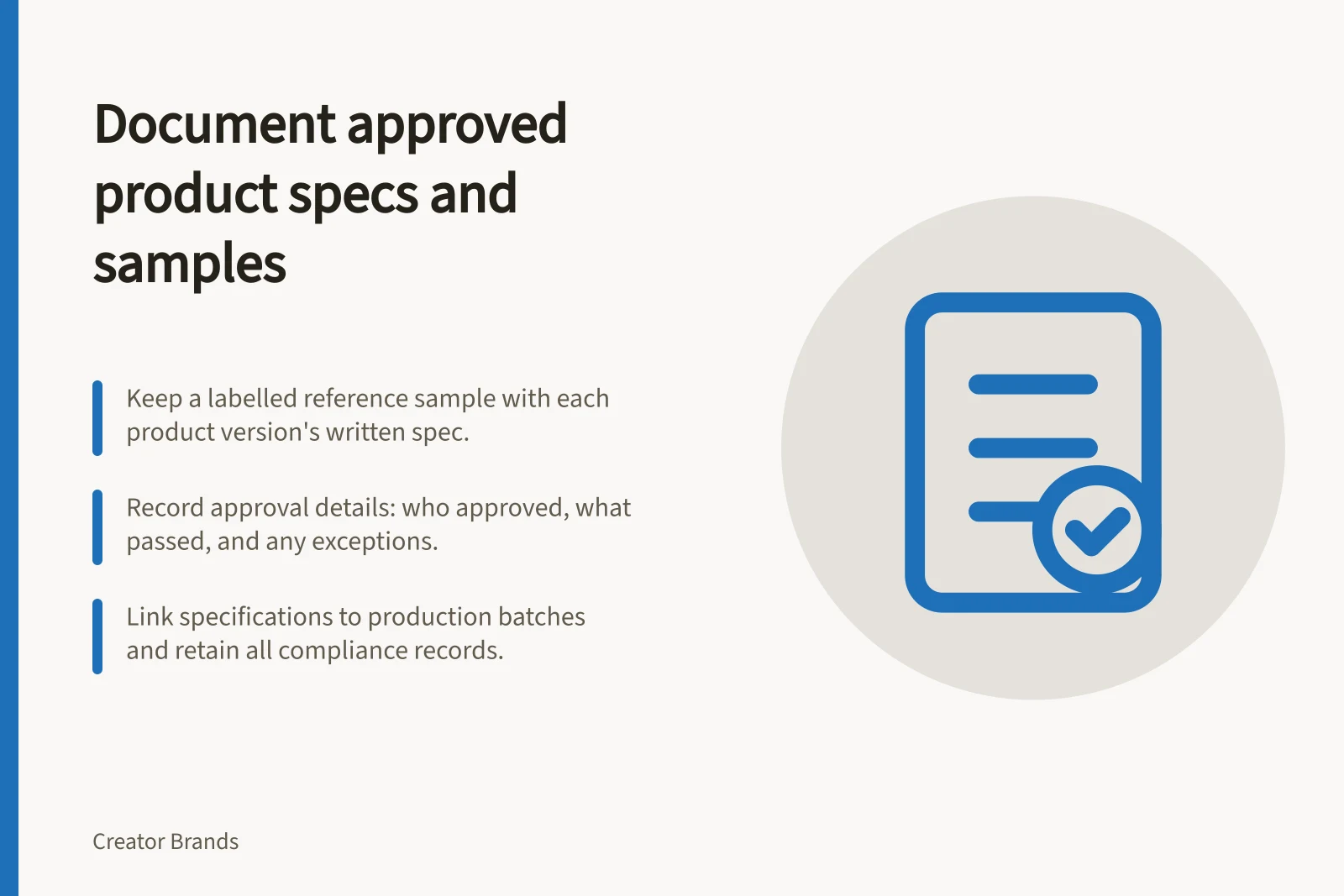
Keep an identifiable reference sample or equivalent approved reference with the current written specification for each relevant product version and variant. Record what was approved, by whom and with which exceptions.
That gives the manufacturer a clear target and the brand a basis for judging later units. A sample alone cannot carry every instruction.
Record more than appearance
A working specification should identify the product and version. It should also cover intended materials or contents, measurements and permitted tolerances, colour or finish references, components, packaging, labels and instructions.
Add the criteria used to decide whether a unit is acceptable. Photographs can clarify details if tied to the sample or version shown.
Write acceptance points as observations someone can repeat. For a hypothetical fabric pouch, “zip runs without snagging through a full open-and-close cycle” is clearer than “premium zip”. The actual product would still need appropriate safety, durability and appearance checks. This example is a drafting aid, not a tested standard.
Keep applicable product rules in a requirements record associated with the specification. Australian safety and information requirements depend on the item; internal sign-off cannot replace them.
Make approval unambiguous
Label submitted samples or references with their version and date. Record who reviewed them, which specification was used, what passed, what failed and what remains open. Use “approved for production” only when the agreed production details are settled. If shape is approved but the label is unfinished, say so.
Send the approved version and reference identification to the manufacturer and obtain acknowledgement. Retain earlier versions but mark them superseded. The production team should be able to tell whether a later message changed a drawing, material choice or photograph.
For each proposed change, record the reason, affected version or batch, evidence needed, approver and effective date. A different material may call for another sample, testing, revised packaging copy or a change to the customer description before approval.
Timeline for tracking changes and approvals in product development
- Initial design and sample submission
- TBD
- Review and approval of sample and specification
- TBD
- Manufacturer acknowledgement of approved version
- TBD
- Production batch initiation with documented materials and batch ID
- TBD
- Post-production inspection and compliance verification
- TBD
Tie records to production
Ask the manufacturer to identify the relevant materials and production batch for each run. Keep purchase orders, approvals, inspections and any test reports with the production record. Check whether a report covers the right product or stock and the applicable standard and methods. Earlier evidence may no longer answer the question after a design, material or production change.
On receipt, record differences from the approved target. Hold affected units while the business decides whether they meet the criteria, need rework or require specialist assessment. Do not rewrite a specification after the fact to make a failed batch appear compliant.
Pros and cons of maintaining detailed documentation for product specifications
- ProsEnsures consistency across batches, supports compliance with ACCC and Product Safety Australia requirements, enables faster problem resolution during recalls or complaints
- ConsRequires additional time and effort to maintain, may become complex for businesses with many product variants
Use the record after launch
A version and batch record helps investigate which units might be affected by a reported problem. Record the finding and carry any justified correction into the next version. ACCC product safety guidance calls for inspection of received shipments and written compliance records.
A first product does not need a large document system. Its records should answer what was agreed, what was made and which units were accepted.