Manufacturing
Part of Creator brand manufacturing
Planning a backup when production is delayed
Set triggers for a delayed creator product run, compare feasible production options and keep the live offer tied to verified supply.
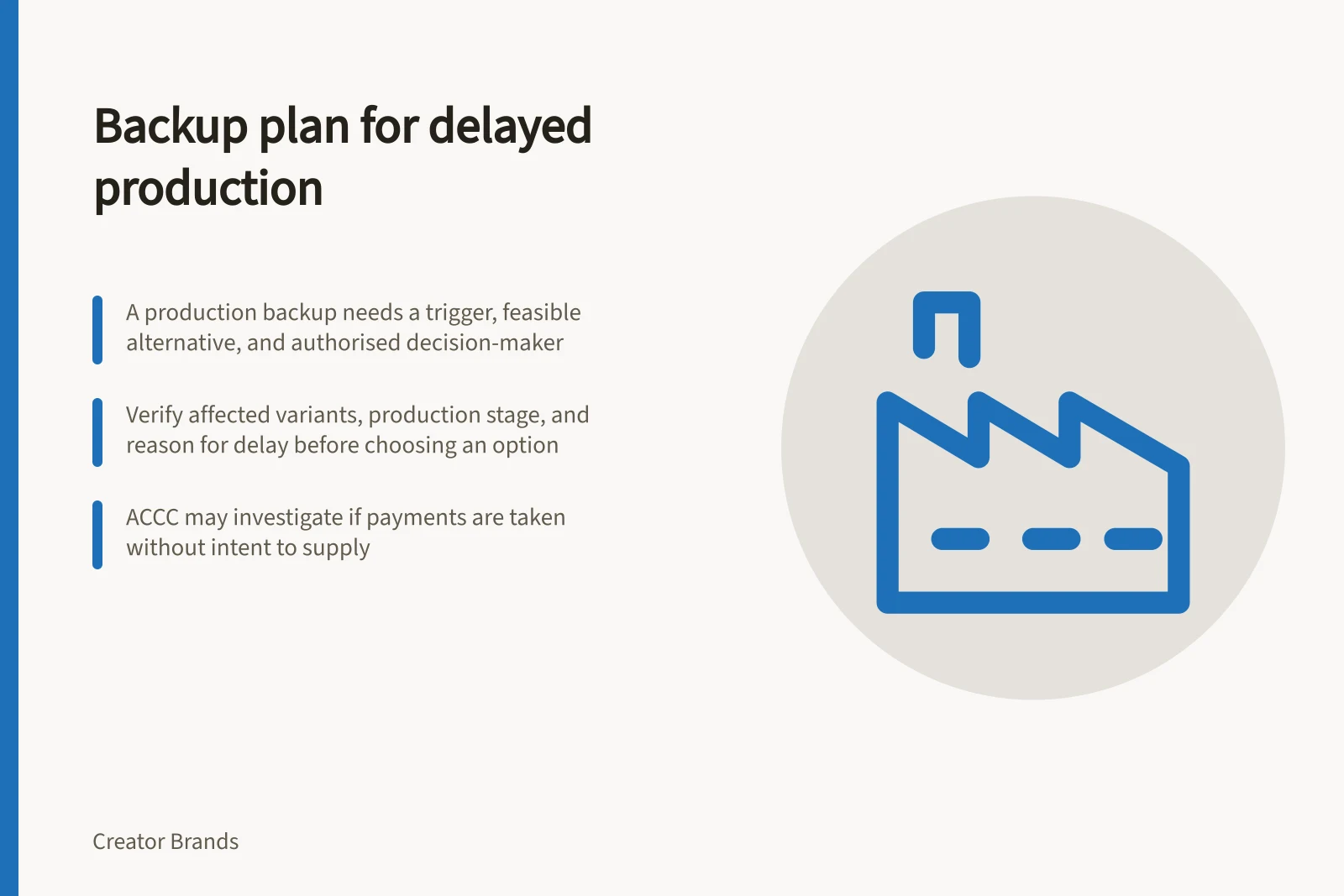
A production backup needs a trigger, a feasible alternative and someone authorised to change the supply plan. Prepare those choices before announcing a firm sales date.
When a run slips, verify what is affected. Then choose an option the business can support: hold the launch, release accepted stock, narrow the offer or qualify another production route.
Find the dependency that moved
Ask the manufacturer which version and variants are affected, the current production stage, the reason for the delay and the next milestone that can be verified. Separate a missed factory date from a failed quality check, a component shortage, freight or receipt. A revised factory estimate helps planning but is not, by itself, a customer dispatch promise.
Keep a brief status record: last confirmed milestone, accepted units, units still under review, next decision date and owner of each action. Check supplier terms for change and delivery procedures while correcting any customer-facing date the business can no longer support.
Choose an operational backup
Hold the launch. Use this when neither saleable quantity nor timing can be supported. Pause sales activity that depends on the old date and set a point to review the production evidence again.
Release fewer units. Offer only identified variants and quantities that have passed relevant checks and can meet the stated dispatch terms. Keep units awaiting inspection or rework out of the saleable count.
Qualify another producer. Give the candidate the current specification and assess its sample, production controls, timing and evidence required for the actual product. A different factory or material cannot automatically inherit approval from the original run.
Offer later supply. Describe the product’s status and use a delivery estimate for which the business has reasonable grounds. If timing is too uncertain to support an order, an interest list can collect requests for updates without presenting them as orders or reservations.
Set a trigger for each option
Write down what must be true before an option becomes available. A smaller release might require completed inspection and receipt of a named variant. A replacement producer might require an approved reference, agreed quality checks and applicable test evidence. Assign who can pause checkout, change the available quantity and stop scheduled creator content.
Work backwards from dispatch through receipt, freight, inspection, possible correction and production. Check the dependencies before using a new public date. Where a key milestone is still unknown, give a date for the next status update instead of a speculative launch date.
Production Recovery Timeline with Triggers
- Next milestone verification
- Check confirmed factory progress or quality check outcome.
- Trigger: Completed inspection
- Enable release of fewer units; update product page and notify customers.
- Trigger: Approved reference sample
- Activate replacement producer; confirm quality checks and test evidence.
- Next status update date
- Set public date for next production review if key milestones remain unknown.
Keep the live offer accurate
Update the product page and any active sales message when the production decision changes. If customers have paid, identify affected orders and contact them directly with the current timing or uncertainty and a route to discuss the solutions available for their order. A general audience post does not replace that contact.
The ACCC says it can investigate and may take compliance or enforcement action if a business breaks rules about accepting payment without intending to supply. It does not resolve individual disputes about delayed supply. The remedy for an existing order depends on its terms and circumstances.
Revisit the backup after each verified milestone. The working plan should identify the offer now available, the units or credible production route behind it, and the evidence needed for the next decision.