Team Design
Part of Creator brand reputation risk
Managing the business impact of a creator controversy
Map creator-dependent assets and commitments, make documented interim campaign decisions and keep existing customer orders supported.
When a controversy concerns a creator associated with a product brand, map the activities that depend on that association. Decide which promotions can continue, which need a temporary hold and who may make those decisions under the actual agreements. A hold is a business action while facts are checked, not a finding about an allegation.
Map the exposure
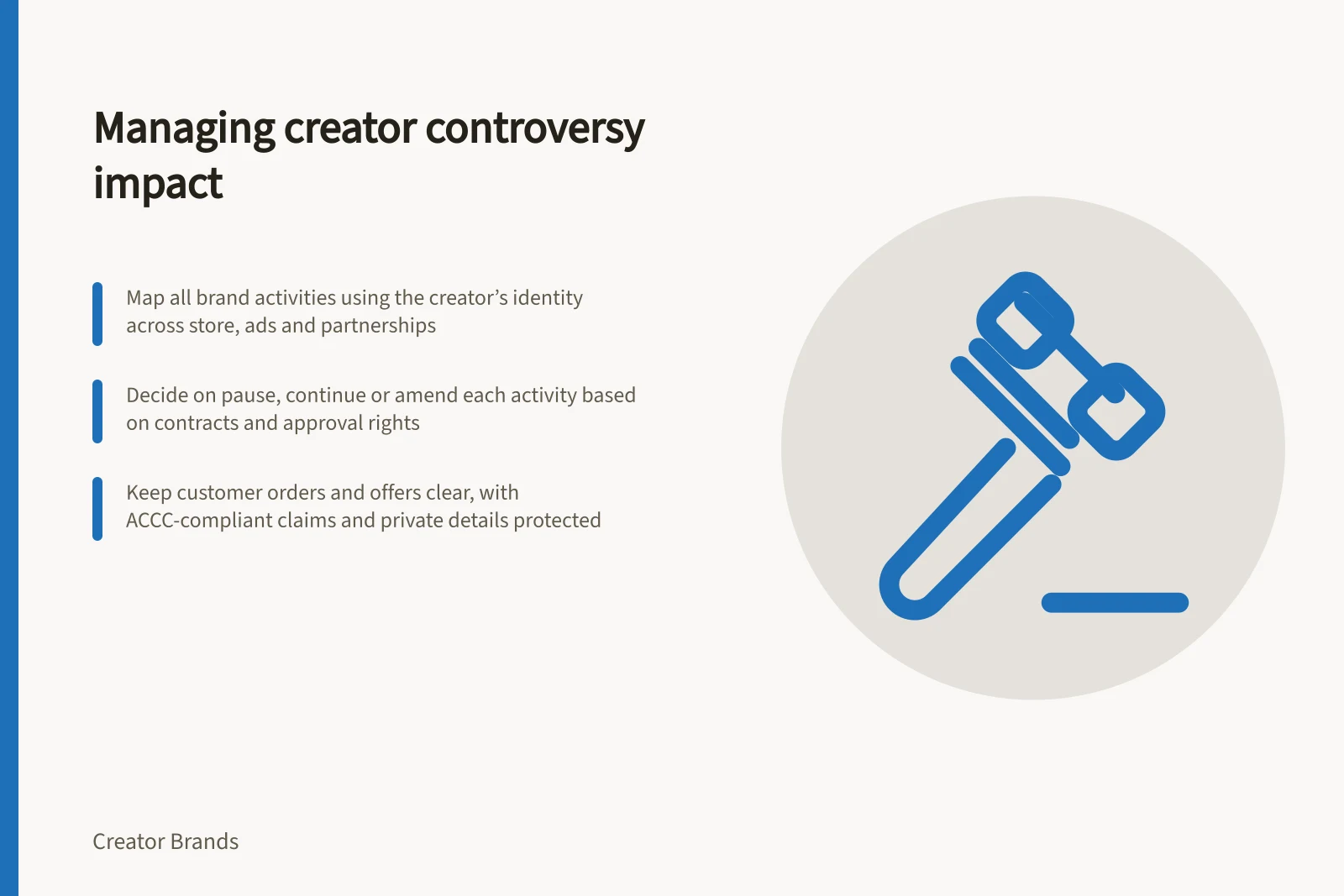
List current uses of the creator’s identity across the store, packaging, scheduled content, paid advertisements, retailer listings and partner campaigns. For each, note its owner, contract or approval dependency, cost and earliest practical change point. A draft caption can be put on hold quickly; printed packaging or a retailer commitment may require a different decision.
Review the agreements for permitted uses of name and image, approval rights, cancellation terms and who may speak for the business. The public description “creator owned” does not settle those rights. Obtain qualified advice before announcing a contractual outcome where rights or allegations are contested.
Make an interim decision for each activity
| Activity | Check | Possible decision |
|---|---|---|
| Scheduled promotion | Current claims, stock and approval terms | Continue, amend or pause |
| Store and service | Open orders, live information and service capacity | Maintain service and correct errors |
| Retail or partner campaign | Assets in use, dates and notice terms | Give a verified operational update |
| New creator-led work | Required consent and unresolved dependencies | Defer a new commitment |
These are options, not a standard response to every controversy. Record the reason for each decision, who authorised it and when it will be reviewed. Check that an instruction to pause advertising does not accidentally interrupt fulfilment or customer support.
Keep the offer and existing orders clear
If promotion stops, inspect the landing page and checkout for claims that may still be circulating. If the product or supply position changes, correct the offer at the point of sale. The ACCC provides general guidance to businesses and consumers on how consumer law operates, including avoiding claims that are false or misleading. The ACCC can require businesses to back up claims they make on social media and can investigate false or misleading claims in social media advertising.
A creator dispute does not itself settle a customer’s product problem. The ACCC educates consumers and businesses about their rights and responsibilities under consumer law, but it does not resolve individual disputes or give legal advice about a consumer’s right to a repair, replacement or refund for a faulty product or service. If supply is disrupted, identify affected paid orders, contact those buyers with accurate information and give them a route to discuss their order. Keep private order details out of public exchanges about the creator.
Measure only what the records show
Track the period of any campaign hold, committed spend, affected orders, cancellations, support volume, stock at risk and changes to live assets. Compare with prior business records while noting changes in stock, pricing and promotion. A sales movement during the dispute does not, by itself, show how much the controversy caused.
Revisit interim choices when facts, contract advice or customer impact change. The business should be able to explain why it continued, changed or held each activity while meeting commitments already made.
Key metrics to track during a campaign hold
- Campaign hold duration
- Days since pause initiated
- Committed spend affected
- AUD $ amount tied to paused promotions
- Orders impacted by disruption
- Number of paid orders requiring communication
- Support volume increase
- Change in customer inquiries during dispute