Brand Positioning
Creator brand positioning
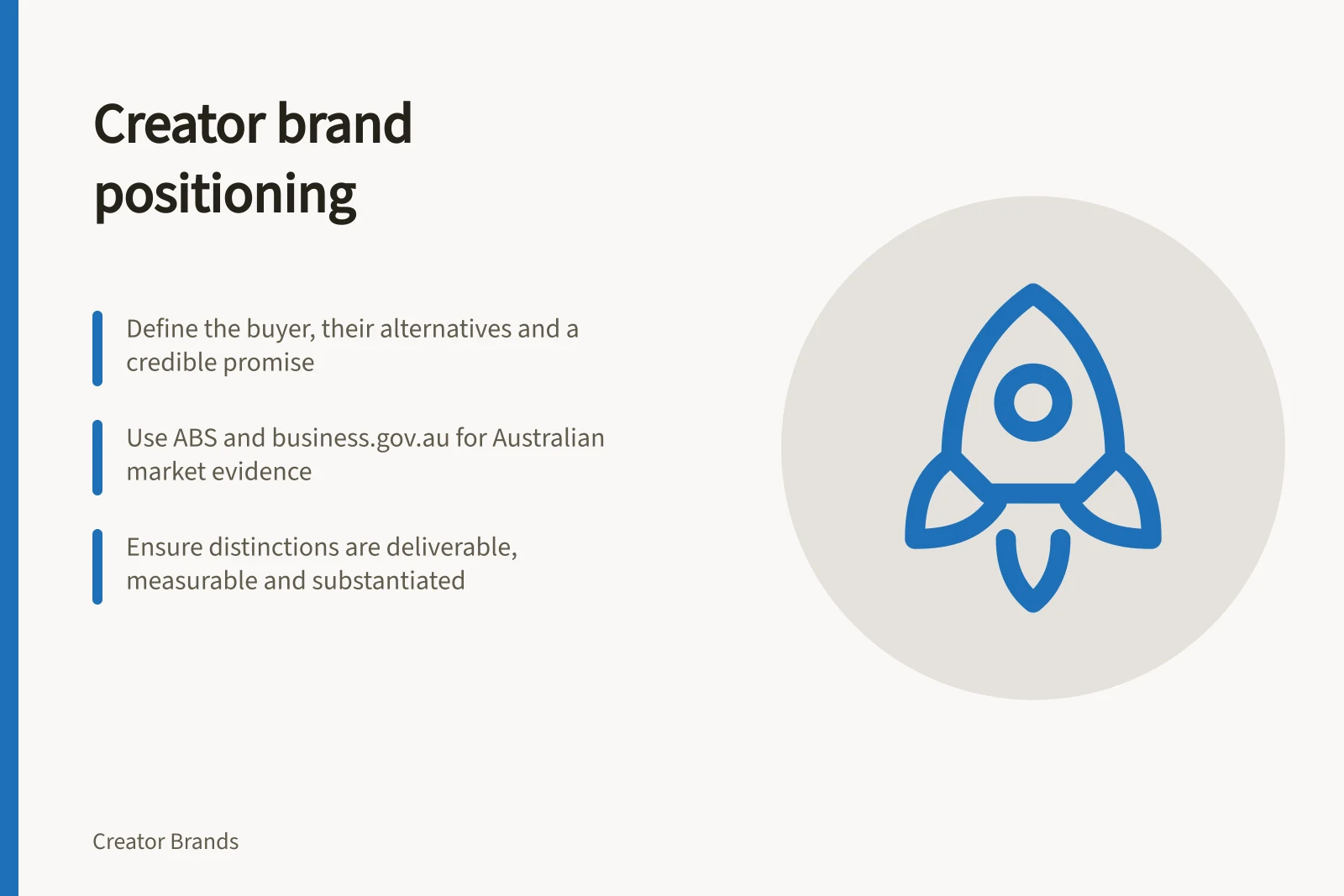
Define who a creator product serves, what buyers compare it with and the credible promise that connects the product with the creator.
Define who would choose the product, what they would choose instead and what the product can credibly promise. The creator’s reputation can draw attention to the offer.
Start with the buying situation
Describe a moment when someone would consider the product: what they are trying to do, what they use now and which factors matter when comparing options. Choose factors relevant to the item, such as size, ease of use or price.
Describe the intended buyer through that situation, not as “our followers”. Some followers may have no use for the product; someone unfamiliar with the creator may need it. The position should make sense to both.
Examine comparable offers and speak with people who face the problem. Record what remains uncertain. These steps can expose weak assumptions, but they do not establish demand for an unfinished product.
Key Factors in Creator Brand Positioning: What to Consider
- Buyer DescriptionSpecific situation, not just 'followers' – e.g., 'a remote worker in a small shared home office'
- Product Use CaseClear moment of need – e.g., 'clearing the desk quickly for a video call'
- Competitor AlternativesReal products buyers compare – e.g., standard desk organisers or digital task apps
- Credible DifferentiatorMeasurable or observable feature – e.g., 'fits under a monitor without obstructing cables'
- Creator's RoleSubstantiated contribution – e.g., 'identified recurring frustration with clutter during virtual meetings'
Use existing market evidence
Before settling on a position, check whether existing research clarifies the buyer, product category or competitors. business.gov.au suggests government data, industry and market reports, news articles, and trade and industry associations as possible sources.
For Australian context, the Australian Bureau of Statistics (ABS) provides statistics on people, industries and local areas, including some free data services. Local-area information and industry trends can add context to a buyer description; research on what people think of products can sharpen which differences matter.
Choose a distinction buyers can evaluate
Compare products the buyer might actually consider. Note what each does, its relevant trade-offs and its terms of sale. Then identify a difference your team can deliver and explain. Association with a favourite creator may matter to fans, but it is not a product difference.
A useful distinction might concern a particular use, design choice or service experience. If the proposed advantage is “better quality”, specify what that means and what evidence would support the claim. Describe an unverified prototype feature as a design aim until the saleable product supports it.
Describe the creator’s contribution accurately. They may have noticed a recurring frustration, shaped a brief or demonstrated a use. Product specialists and operators may have done other work. The position need not credit the creator with expertise or tasks they did not have.
Write a working position
Use this sentence as an internal decision tool: For [buyer in a defined situation], [product] offers [specific useful outcome] through [credible difference], compared with [realistic alternative]. It does not have to appear in customer-facing copy.
For a hypothetical desk organiser for people in small shared rooms, the working position might focus on keeping daily tools accessible while making the desk easy to clear. The team would still need to check the design and compare actual alternatives. The example establishes neither a product benefit nor customer demand.
Check each part of the sentence. If the buyer is “everyone”, narrow the situation. If the alternative is missing, the distinction may be vague. If the difference cannot be delivered or supported, change the promise.
How to Build a Validated Creator Product Position
- Define the buyer’s specific situationAvoid vague terms like 'everyone' – focus on a real-life moment of need
- Identify realistic alternativesCompare actual products users might consider, not hypothetical ones
- Choose a credible differenceEnsure it’s measurable and deliverable – avoid vague terms like 'better quality'
- Write a working position statementUse the formula: For [buyer], [product] offers [outcome] through [difference], compared with [alternative]
- Verify claim support and creator roleCheck against actual product capabilities and substantiate all claims
Give the creator a precise role
Decide what the creator contributes to the explanation. They may introduce the problem, explain a design choice or show the product in use. Describe only involvement and experience that can be substantiated. Having an audience does not establish product performance.
A truthful origin story can explain a product decision.
Review product descriptions, images, benefits and limits against the item for sale, and assess the overall impression.
Pros and Cons of Using a Creator’s Reputation in Product Positioning
- ProsBuilds trust with existing audience; adds authenticity to problem-solving narrative
- ConsMay mislead if claims aren’t backed by product performance; can trigger ACCC scrutiny if exaggerated
Keep evidence behind the promise
The ACCC can require businesses to substantiate product or service claims, including claims made on social media. It may investigate or take compliance or enforcement action if claims are false or misleading.
Check the position across channels
Read the product page, a promotional post and a plain listing in sequence. Do they describe the same item, intended use and meaningful limits? Does the creator’s account imply experience with a production version they have not used?
To check clarity, show the same product information to people unfamiliar with the creator. Ask what they think the item is, when they would use it and what they would compare it with. Use misunderstandings to revise the explanation. This exercise checks comprehension; it does not measure purchase intent or market size.
Keep a short positioning record covering the buyer, buying situation, alternative, promise, claim support, creator’s actual role and unresolved questions. Update it when the saleable product or customer understanding changes.
In this guide
- Separating the product promise from the creator's fameWrite a product promise a new buyer can assess, then describe the creator’s actual role without overstating benefits or experience.
- Defining buyers beyond the existing follower baseDescribe prospective buyers by their product need, alternatives and constraints, then refine the profile with appropriately bounded research.
- Writing a credible reason for a creator's product launchConnect the creator’s real contribution to a product decision, and keep the launch story accurate about the item customers can buy.