Brand Positioning
Part of Creator brand positioning
Separating the product promise from the creator's fame
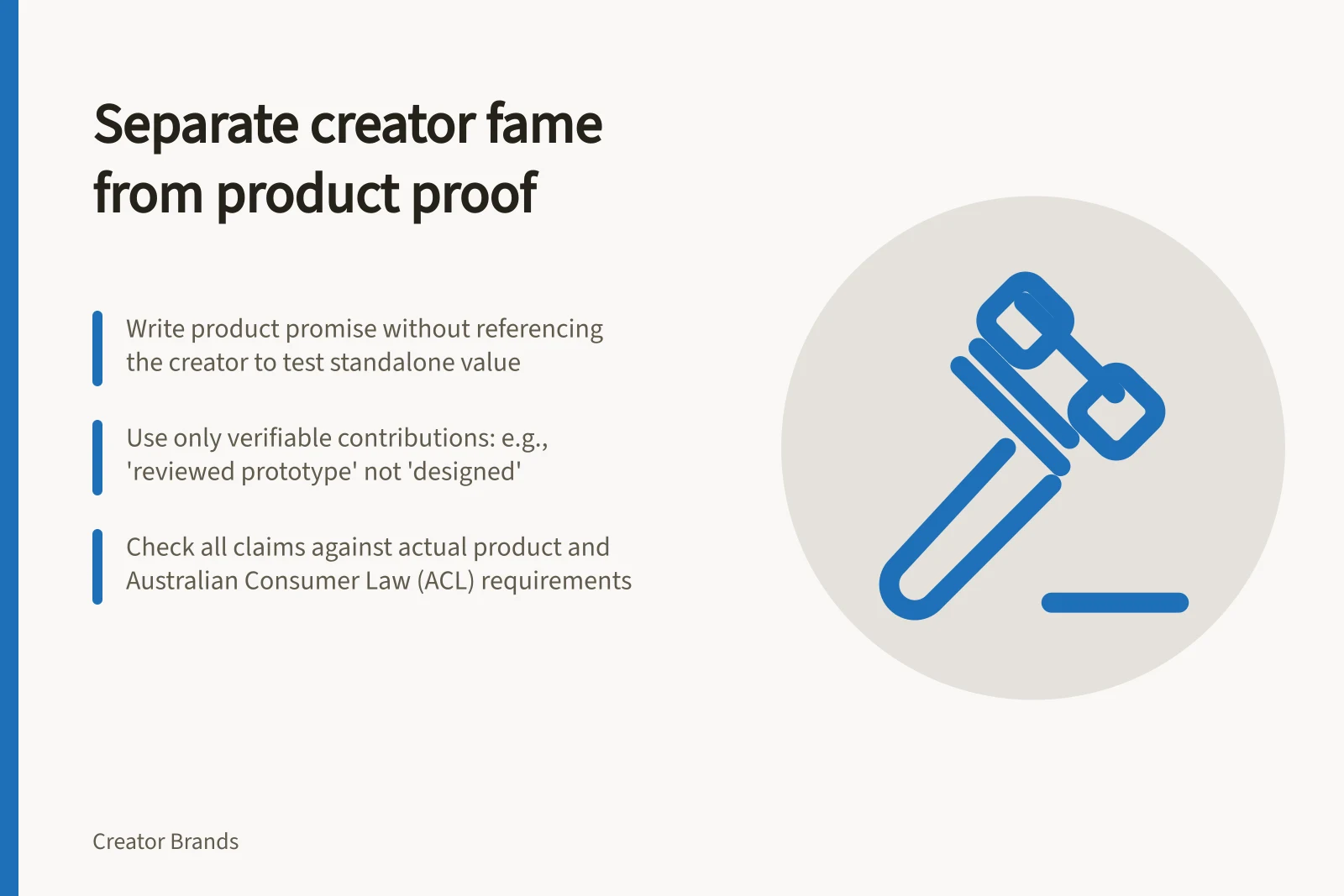
Write a product promise a new buyer can assess, then describe the creator’s actual role without overstating benefits or experience.
Write the product promise so a buyer can assess the item without recognising the creator. Then explain the creator’s connection using only what they actually contributed or experienced. Fame may introduce the offer, but it cannot substantiate a product benefit.
Give each message a job
The product promise answers what the item is, who it is for, what it helps them do and its relevant limits. The creator message answers why this person is involved and which decision they influenced. “From the creator you love” leaves the buyer guessing about the product.
Put both messages on a draft product page. Cover the creator message. If the remaining copy cannot help someone compare this item with an alternative, replace personality-led adjectives with product details they can inspect.
| Draft message | What a buyer can decide | What still needs checking |
|---|---|---|
| “My favourite creator’s essential organiser” | Who is associated with it | What it contains, fits or helps organise |
| “A compact organiser for tools used at a shared desk” | Whether that use matches their situation | Whether the saleable item supports the description |
These are invented examples. The second message is clearer, but it would still need checking against an actual product before publication.
Match each claim to its support
Separate a description such as “includes three removable trays”, a use claim such as “helps keep daily tools in reach”, and a comparison such as “takes less desk space than other organisers”. Check each against the saleable item. A comparison also needs a fair basis and a defined alternative.
Keep a claim record beside the draft: exact wording, where it will appear, its supporting evidence and any qualification a buyer needs.
Check images as well. A photograph might imply that an accessory is included when it is not. Australian guidance covers avoiding claims that are false or misleading, and businesses can be required to back up the claims they make.
Describe the creator’s actual contribution
Choose verbs that match the work: noticed, briefed, selected, reviewed or demonstrated. A creator who identified a problem and commented on a prototype should not be described as having formulated, manufactured or extensively tested the production item. Credit specialists for technical work where that distinction matters to the story.
The creator can remain visible. Their reason for caring about the problem may explain the product’s origin or a design choice.
The product description must still tell the customer what they will receive. If the creator speaks about personal use, that account should match the version and experience they actually had.
Check what two kinds of reader understand
Show the same draft to readers who know the creator and readers who do not. Ask each to describe the item, its intended use, a realistic alternative and the creator’s role.
If unfamiliar readers recall only the creator, strengthen the product explanation. If familiar readers assume the creator made or used a version they did not, correct the role statement. This checks interpretation, not demand.
Finish with two messages that work together or separately: a promise grounded in the saleable item and a truthful account of why the creator is attached to it. Recheck both if the product changes.