Team Design
Part of Creator brand team design
Separating creative direction from daily business operations
Give the creator a clear creative role while operators manage daily work. Use briefs and an exception route when product or message decisions cross that boundary.
Separate decisions needing the creator’s creative judgement from the recurring decisions required to sell and deliver the product. Give the operator a current brief and authority within it.
Send the creator a focused question when a change crosses that boundary. This keeps creative input useful without making the creator the daily queue for stock, order and support decisions.
Define the working boundary
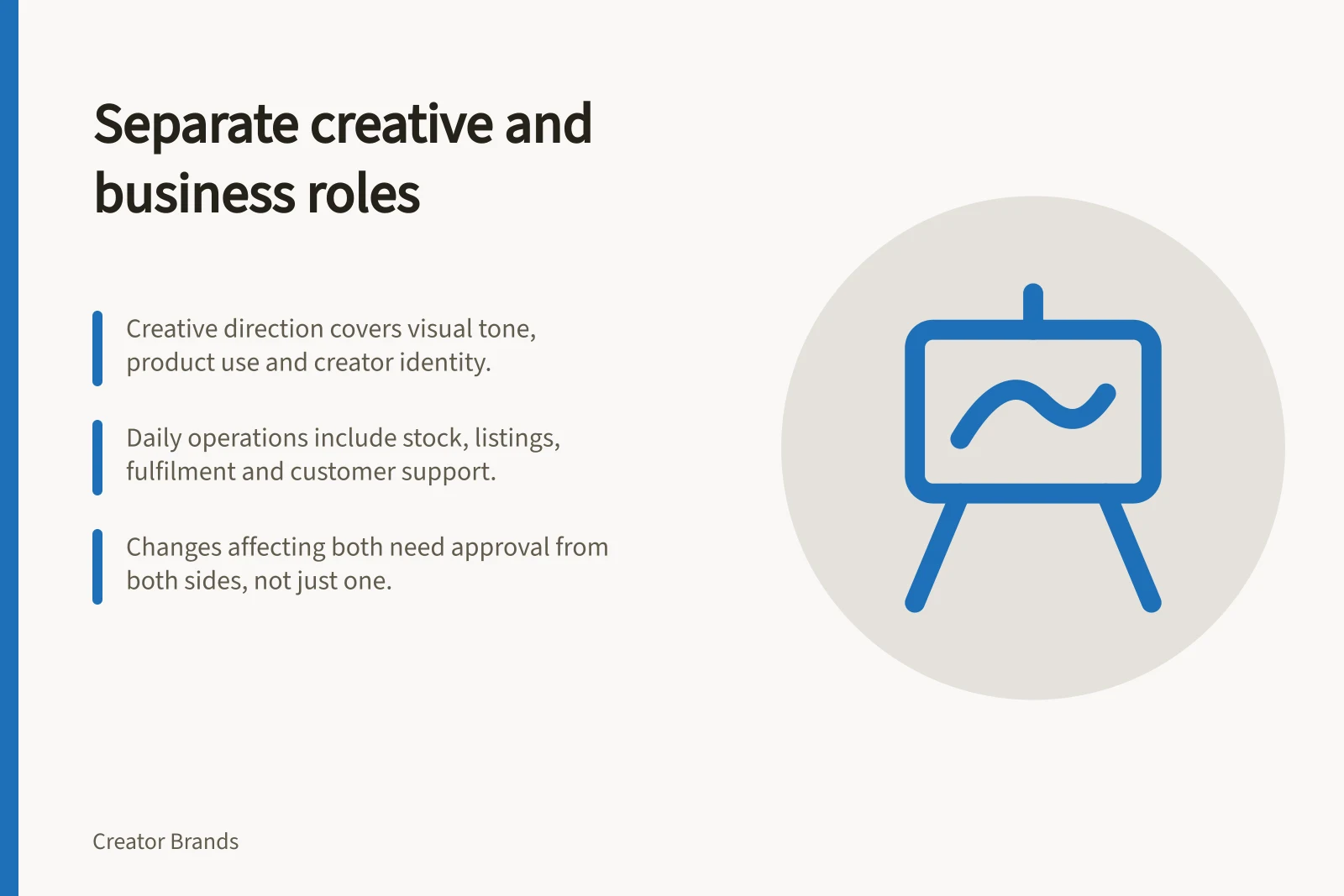
Creative direction may cover intended use, visual tone, demonstrations and statements attributed to the creator. Daily operations include supplier and stock records, listings, fulfilment and customer cases. Some changes affect both. A different product material, for example, could change its appearance and make an earlier demonstration inaccurate.
For each change, ask: Does it alter the agreed creative promise or use of the creator’s identity? Does it alter what the business can accurately supply now? A change may need both creative input and an operational check. Approval by one side does not answer the other side’s question.
Exchange two short briefs
Keep a creative brief with the approved product version, design choices, supported claims, relevant limits and approved uses of the creator’s name, image and content. Mark unresolved proposals clearly. Within that brief, an operator should be able to maintain ordinary listings without asking the creator to rewrite every product tile.
Before the creator approves a demonstration or sales message, give them an operational brief: the version being sold, what is included, available variants and the delivery statement the team can support.
For social media promotions, the ACCC provides guidance on avoiding false or misleading claims. It can require businesses to back up claims they make, including claims about products or services. A script approved last week may be wrong after a product or supply change.
Route exceptions by the decision needed
Agree what the operator may correct immediately and what must wait for creative review. A wrong price or unavailable variant needs a prompt correction by someone with access to the live offer. A proposed new colour may need creative input before production. Questionable stock should be held for assessment by the appropriate product owner.
For a request to the creator, identify the proposed change, affected product version, options, evidence and decision deadline. State what happens if no answer arrives. Do not treat silence as consent to a new use of the creator’s likeness or an important attributed statement unless the governing agreement expressly permits it.
Bundle routine creative questions into a planned review. Escalate promptly when a product problem or inaccurate attributed statement needs attention. An operator can report what was corrected and why without asking the creator to approve an error remaining live.
Check the handover when a product changes: can the operator update the store and affected content, can the creator see the exact creative decision, and can support explain the current offer? Clarify any step that still depends on an informal message to one person.